
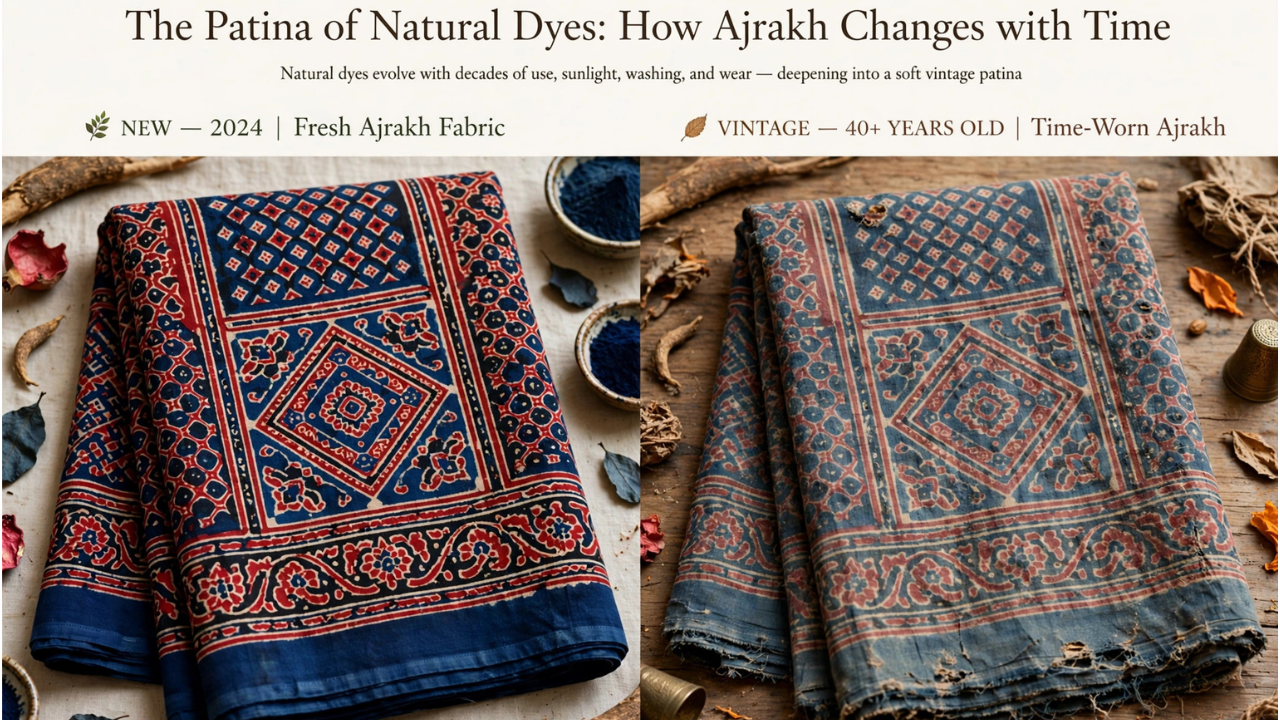
A new Ajrakh textile often catches the eye with its rich indigo blues, earthy reds, and carefully repeated patterns. The colours may look deep and crisp when the fabric first arrives, but their appearance can change as the textile becomes part of everyday life. Washing, sunlight, friction, and regular handling gradually influence the surface and colour of naturally dyed fabric.
These changes do not always mean that the textile has lost its beauty. In some cases, gentle shifts in tone give the fabric a softer appearance and reveal the character of its use. Textile lovers often describe this gradual transformation as a patina—a visible quality that develops as an object ages.
The phrase natural dyes fading patina Ajrakh brings together three connected ideas: colour change, the behaviour of traditional dyes, and the beauty that a handcrafted textile can develop over time. Understanding these ideas helps buyers care for their Ajrakh sarees, dupattas, scarves, and other garments without expecting every piece to age in exactly the same way.
Indigo and madder offer two useful examples. Indigo creates the familiar blue shades associated with Ajrakh, while madder-derived colorants can produce red and reddish-brown tones. Both respond to their environment, but they behave differently because they use different color-forming processes and interact with fabric in different ways.
Why Natural Dye Colours Change
Natural dyes come from materials such as plants, roots, leaves, and other natural sources. Their colour depends on the source material, extraction method, fabric preparation, dye concentration, and finishing process. Even two textiles made by the same artisan may not age identically if the fabric or dye bath differs.
A finished textile also experiences more than one kind of colour change. The dye itself may respond to light or washing, the fabric surface may become smoother through wear, and small fibers may change how they reflect light. These effects can make a colour look lighter, softer, warmer, or less sharply defined.
The word fading describes a reduction in colour intensity or a visible loss of the original shade. Patina, by contrast, describes the overall appearance that develops with age and use. A patina may include fading, surface wear, softening, or other changes, but the terms do not mean the same thing.
For an Ajrakh textile, this distinction matters. A slight softening of indigo after careful washing may look different from uneven fading caused by strong detergent or prolonged direct sunlight. One change may form part of the textile’s natural life, while another may indicate that the fabric needs gentler care.
The Aging Process
The aging process begins as soon as a textile encounters its surroundings. Storage, light exposure, humidity, washing, body oils, perspiration, and friction all influence how a fabric looks over time. The rate of change depends on the dye, fiber, printing technique, and care routine.
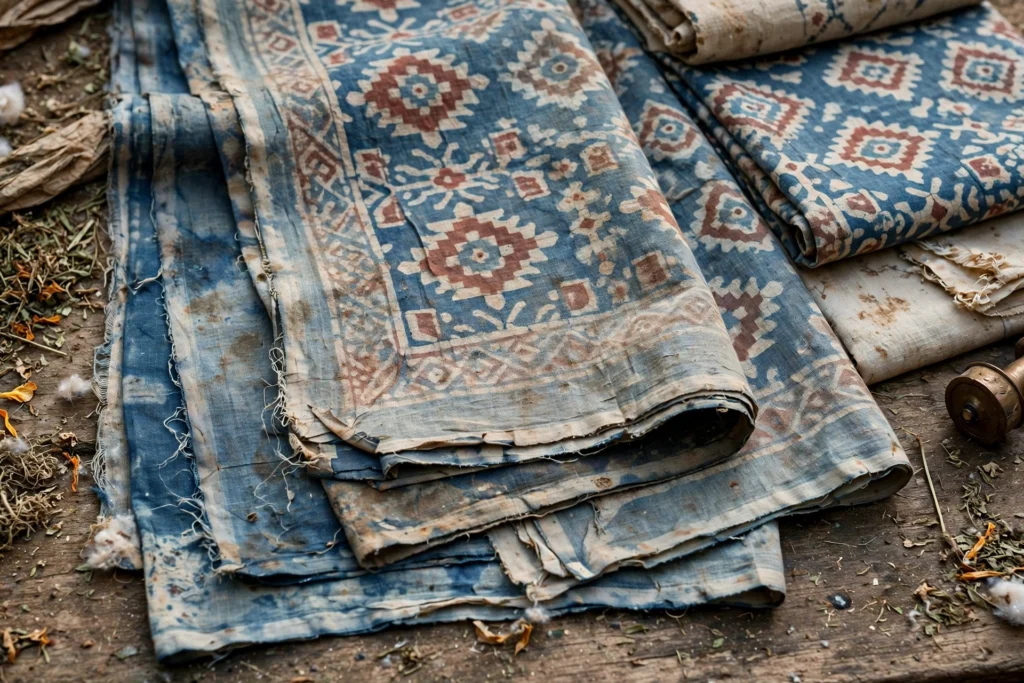
The First Wash: What Can Change?
The first wash can reveal how a textile responds to water and handling. Depending on the manufacturing process, a small amount of loose colour or surface residue may come away during washing. Some naturally dyed textiles may also release colour more noticeably than others.
However, colour release is not an unavoidable feature of all natural dyes. A well-prepared and properly processed textile may show good colour retention, while a poorly fixed or unsuitable dye process may lead to excessive colour loss.
Follow the care instructions supplied by the maker. If the label recommends professional cleaning, do not assume that a home wash will produce the same result. When hand washing is appropriate, use cool water, a gentle detergent, and minimal agitation. Wash similar colours separately, especially when you do not know how colorfast the fabric is.
Avoid judging the quality of a textile from one wash alone. Instead, observe whether the colour remains reasonably even, whether the fabric feels different, and whether the care method suits the textile’s construction.
After Ten Washes: What Should You Expect?
Ten washes do not create one universal result for indigo or madder. A lightly used scarf washed carefully may retain much of its original appearance, while a frequently worn garment exposed to strong sunlight, friction, and harsher detergents may show more noticeable changes over the same period.
Indigo may gradually lose some surface intensity through repeated washing and rubbing, depending on the dyeing and finishing process. Some fabrics develop a softer blue appearance, particularly in areas that receive frequent friction. This change can create visual depth, but excessive rubbing or harsh washing can produce unwanted patches.
Madder-derived reds can also change with washing and light exposure. The degree of change depends on the specific colorant, mordanting method, fiber, and finishing process. Some shades retain their character well under suitable conditions; others may become less intense or shift in appearance.
Rather than expecting a fixed percentage of fading after ten washes, compare the textile under consistent lighting. Notice the overall shade, the contrast between printed areas, and any differences between exposed and protected sections. These observations give a more useful picture of how the individual garment is aging.
For a reliable comparison, a textile maker or laboratory would need to control the wash method, detergent, water temperature, agitation, drying conditions, and assessment method. Standardized colorfastness tests can provide more meaningful evidence than an informal wash count.
Indigo and the Beauty of Oxidation
Indigo has a distinctive relationship with oxygen. During traditional indigo dyeing, the colorant undergoes a reduction process that allows it to enter the dye bath in a soluble form. When the textile comes into contact with air, oxidation converts the colorant into its characteristic insoluble blue form within and on the fibers.
This oxidation stage helps produce the familiar blue associated with indigo-dyed textiles. It is part of the dyeing process, not simply a sign that an old garment is changing colour.
After dyeing, the textile continues to face light, water, friction, and other environmental conditions. These factors can influence colour retention, but they do not mean that the original oxidation process repeats in exactly the same way every time someone washes the fabric.
Indigo’s visible behaviour also depends on how the artisan applies it. Repeated dips, dye concentration, fabric preparation, and the structure of the textile can all affect the final shade. Two Ajrakh fabrics with similar blue colours may therefore respond differently to years of use.
Why Indigo May Look Softer with Wear
Repeated friction can affect the appearance of an indigo-dyed surface. Contact with bags, jewelry, furniture, or other fabrics may gradually change the most frequently rubbed areas. Washing can also remove loose material and contribute to changes in colour intensity.
This process may create differences between high-contact areas and protected folds. Some people appreciate this gradual variation because it gives the textile a lived-in quality. Others prefer to preserve the original contrast for as long as possible.
Neither preference is wrong. The important point is to distinguish a gradual, reasonably even change from sudden colour loss caused by poor care. Strong detergents, hot water, vigorous scrubbing, and prolonged exposure to direct sunlight can accelerate unwanted changes.
Store indigo textiles away from harsh sunlight when not in use, and follow the maker’s instructions for washing and drying. Gentle handling can help preserve both the colour and the printed details.
Madder Reds: A Different Path to Patina
Madder-derived dyes have a long history in textile coloring. The roots of Rubia plants contain colour compounds that can create red shades when artisans extract and apply them using a suitable process. The final colour depends on the source material, preparation, mordant, fiber, and dyeing conditions.
Unlike indigo’s distinctive reduction-and-oxidation process, madder dyeing follows a different chemistry. The color-forming compounds interact with the textile and, where applicable, mordants in ways that influence the shade and its durability.
Natural red shades can range from muted brick tones to deeper reds, depending on the method. Over time, light exposure, washing, and friction may affect the intensity or appearance of these colours. The direction and speed of change vary, so it would be inaccurate to claim that every madder-dyed Ajrakh fabric becomes lighter or warmer after a set number of washes.
Preserving Red Without Over washing
Madder-dyed textiles benefit from care suited to their fabric and dye process. Use the cleaning method recommended by the maker, avoid unnecessary washing, and protect the garment from extended periods of direct sunlight.
Do not use bleaching agents or strong stain removers unless the care instructions specifically allow them. Such products can damage fibers or alter colour, even when the dye originally showed good colorfastness.
When a small stain appears, avoid aggressive spot rubbing. Rubbing can affect the surface unevenly and create a pale mark that looks more noticeable than the original stain. Seek professional advice for valuable or delicate textiles if you are unsure how to clean them safely.
Fading Versus a Beautiful Patina
Fading and patina often appear together, but a useful distinction helps people care for their textiles more confidently.
Fading refers specifically to a loss or reduction of colour intensity. Patina refers more broadly to the appearance that develops through age, use, and environmental exposure. A textile’s patina may include colour changes, softening, surface wear, and the visual history of repeated use.
For example, a well-loved Ajrakh dupatta may feel softer after years of careful wear. Its folds may show subtle differences in shade, while its printed pattern remains recognizable. Some owners see these changes as part of the garment’s personal history.
By contrast, sudden pale patches, strong colour transfer, or sharply uneven loss of colour may signal a problem with dye stability or care. Such changes should not automatically be celebrated as patina. They may warrant a closer look at the washing method or the product’s construction.
The difference often lies in the pattern and severity of change. Gentle, gradual variation can be attractive, but there is no requirement for a textile to fade to prove that it is authentic or handcrafted.
The Role of Sunlight, Water, and Detergent
Natural dyes do not age in isolation. The environment and the care routine have a major influence on the colour that remains visible.
Sunlight and Light Exposure
Light can cause colour changes in many textile dyes. The degree of change depends on the dye chemistry, shade, fiber, exposure intensity, and duration. A garment left in strong sunlight for long periods may change more noticeably than one stored in a dark cupboard.
When drying an Ajrakh textile, follow its care label and avoid unnecessary exposure to intense direct sunlight. For storage, keep the garment in a clean, dry place away from prolonged light exposure.
Water Temperature and Washing Method
Hot water, vigorous agitation, and repeated washing can place more stress on some fabrics and dye systems. Cool or lukewarm water is often a gentler option when hand washing is permitted, but the correct method depends on the textile’s fiber and construction.
Use a mild detergent suitable for the garment, and avoid soaking it longer than necessary. Separate colours when the care instructions recommend it. If the textile is especially delicate or valuable, professional cleaning may be the safer choice.
Detergents and Other Products
Detergents vary in formulation. Strong alkaline products, bleaching ingredients, and stain-removal treatments may affect certain dyes or fibers. Do not assume that a detergent marketed as natural or plant-based is automatically suitable for every naturally dyed garment.
Choose a cleaning product based on the care instructions and the textile’s needs. The goal is to remove soil without exposing the fabric to unnecessary chemical or mechanical stress.
How Artisans Influence Long-Term Colour
A textile’s long-term appearance begins well before the first wash. Artisans make decisions during fabric preparation, dye-bath management, printing, washing, and finishing that can influence colour retention.
Preparation helps the fabric receive the dye more evenly. The choice of dye materials and the control of processing conditions affect the resulting shade. Appropriate washing and finishing can remove unwanted residues and help prepare the textile for use.
Traditional skill plays an important role because natural materials can vary from batch to batch. An experienced artisan learns to recognize changes in colour, material behaviour, and processing conditions. That knowledge supports consistency, although it cannot eliminate every variation in natural materials.
For buyers, the presence of small differences does not automatically indicate poor quality. Handcrafted textiles can show variation, but colorfastness still matters. A responsible maker should explain the expected care requirements and avoid promising that a natural dye will never fade.
Caring for Ajrakh While Allowing It to Age
The best care routine protects the textile without treating every sign of age as a defect.
- Read the care label first. Different fibers and dye systems need different cleaning methods.
- Wash only when needed. Unnecessary washing can increase wear and water use.
- Use gentle handling. Avoid vigorous rubbing, twisting, or wringing delicate fabrics.
- Protect the textile from harsh sunlight. Extended light exposure can affect colour over time.
- Store it carefully. Choose a clean, dry place and avoid prolonged dampness.
- Follow stain-removal guidance. Strong chemicals can alter colour or damage fibers.
- Ask the maker when uncertain. The artisan or seller may know the dye process and recommended care.
These steps do not freeze a textile in its original condition. Instead, they help reduce avoidable damage while allowing the fabric to remain part of everyday life.
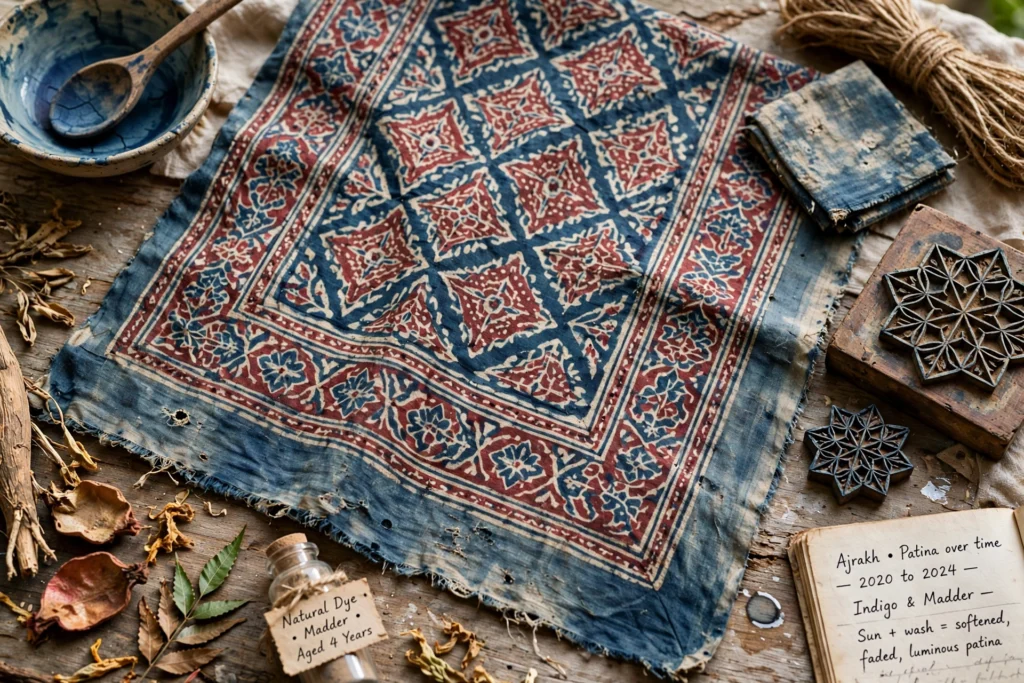
Reading the Story in an Aging Ajrakh Textile
A handcrafted textile changes as it moves from the workshop into a home. It may accompany celebrations, travel, family gatherings, or ordinary daily routines. Its surface records some of that use through softness, folds, and subtle changes in appearance.
For some owners, the value of Ajrakh lies in maintaining its original colour and contrast. Others enjoy the gradual character that a well-used textile develops. Both approaches respect the craft when they involve thoughtful care.
Natural dyes can create beautiful colours, but they do not follow one universal aging pattern. Indigo and madder each respond to their chemistry, the fabric, and the conditions surrounding them. Ten washes may reveal little change in one textile and more visible fading in another.
The most meaningful way to understand patina is to observe the individual piece rather than rely on a fixed promise about how it should age. With suitable care and honest expectations, Ajrakh can retain its distinctive design while carrying the marks of the life it shares with its owner.