
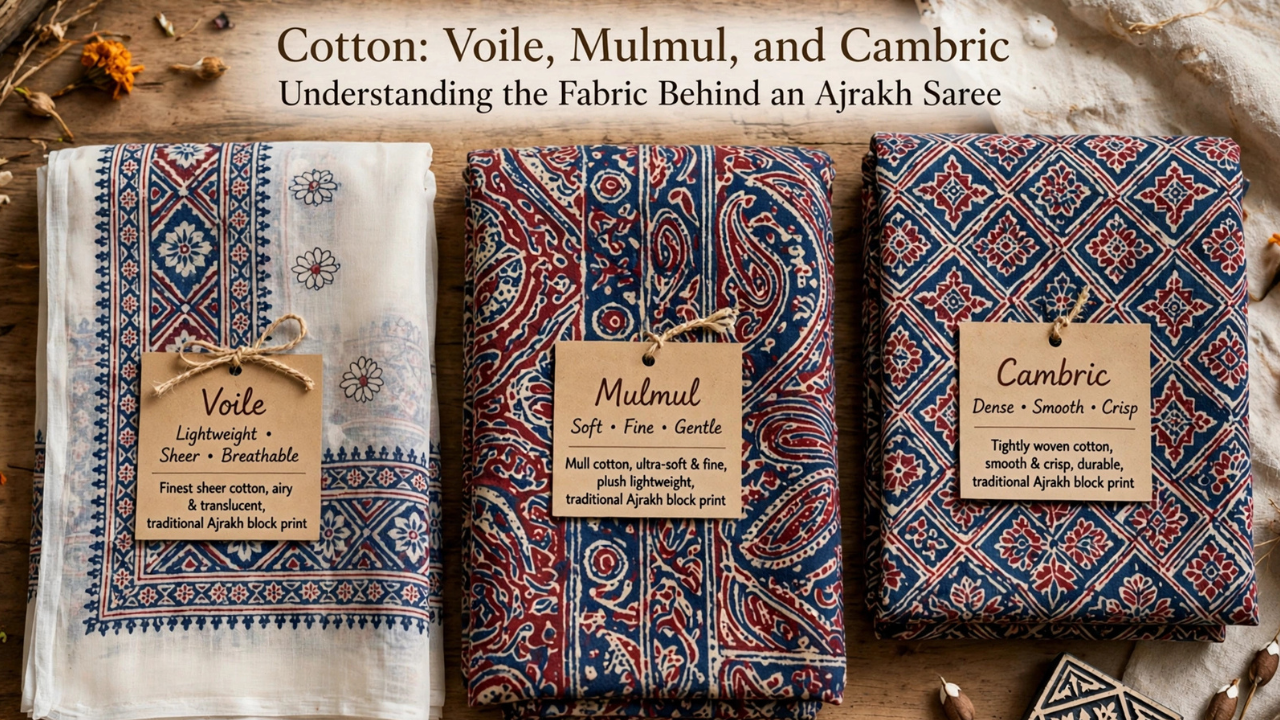
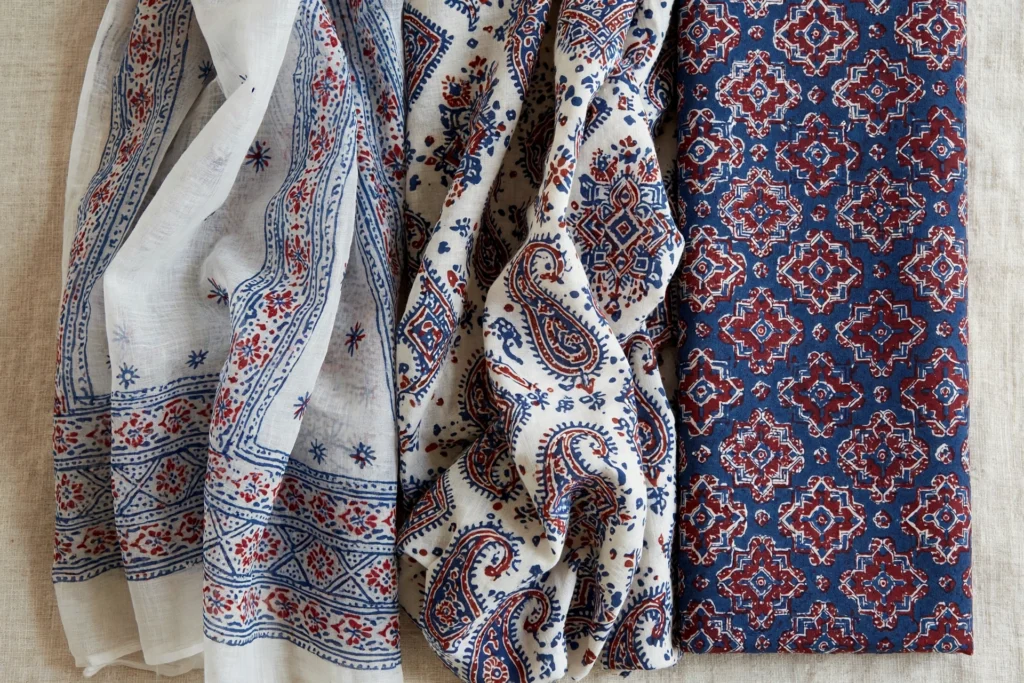
Voile is a lightweight cotton fabric that commonly uses fine yarns and a relatively open, airy construction. Its lightness gives it a fluid appearance, although the exact drape depends on the fabric’s construction and finishing.
When someone lifts a voile saree, the fabric may feel less substantial than a denser cotton weave. During movement, it can fall gently around the body instead of creating heavy folds. This quality makes voile worth considering for people who prefer a light saree for warm weather or extended daytime wear.
How Voile Drapes
Voile generally creates soft, light folds. The pallu may fall gracefully over the shoulder, while the lower portion can follow the body’s movement without feeling overly heavy.
However, a lightweight fabric does not automatically guarantee a perfect drape. A very soft voile may cling more closely to the body, while another voile may feel crisp because of its finishing. The sarees length, width and border construction also influence how it sits.
People who prefer a relaxed silhouette may appreciate voile’s lighter feel. Those who want sharp, prominent pleats should examine the actual product or request a draping photograph before purchasing.
Voile and Ajrakh Printing
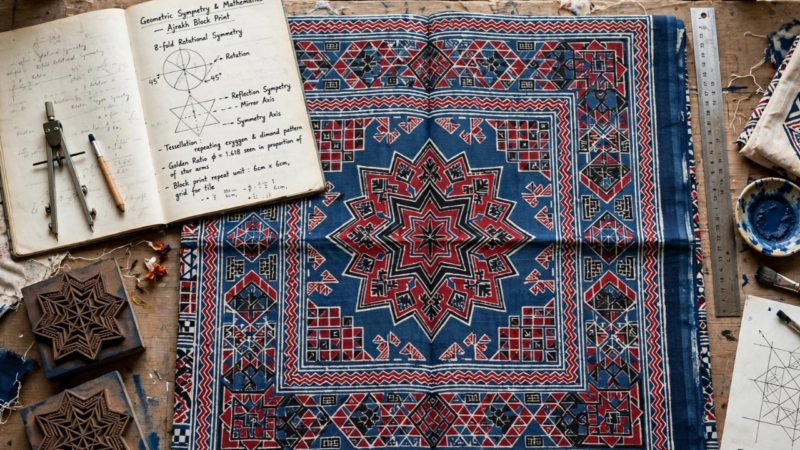
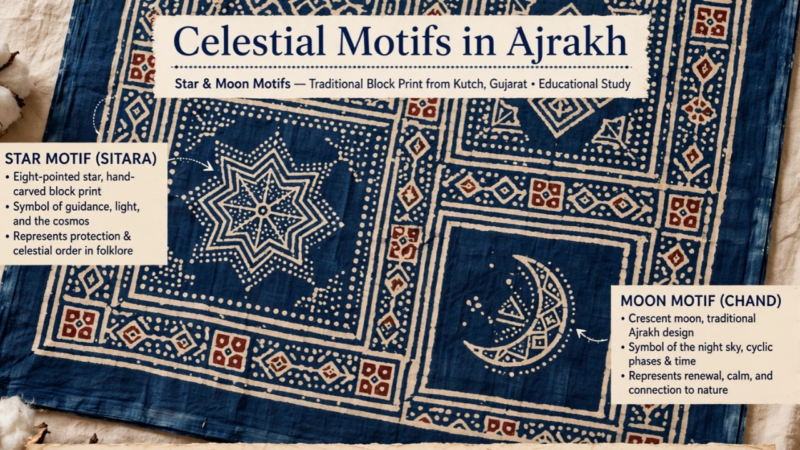
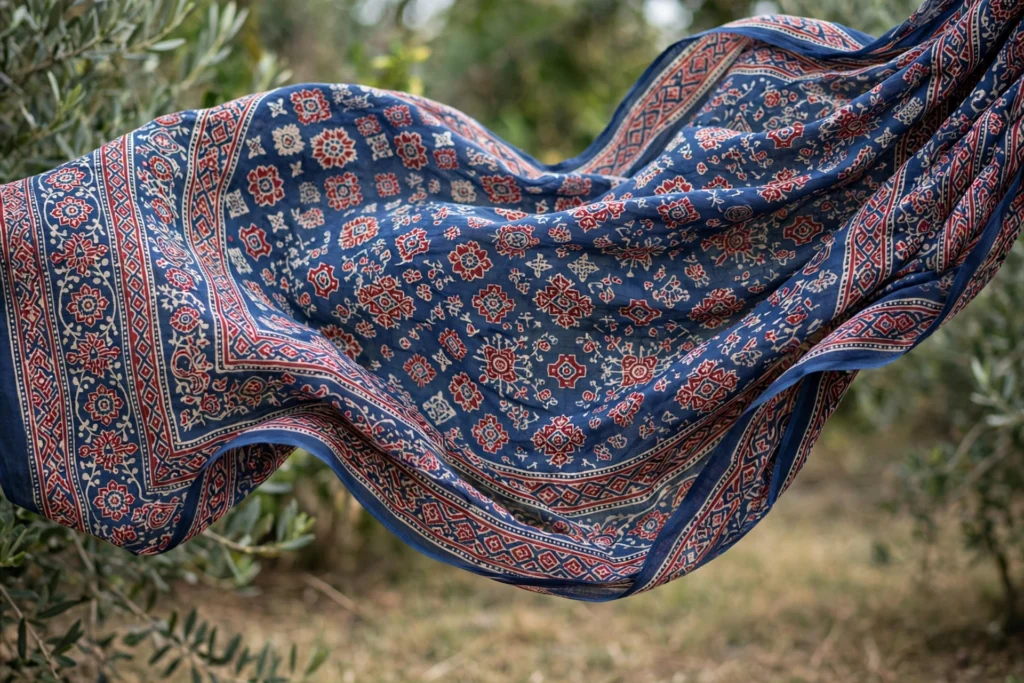
Ajrakh designs often feature repeated geometric arrangements, floral elements and layered borders. On voile, these patterns can create a visually delicate effect because the cloth itself does not add much bulk.
The fabric’s surface and absorbency influence the final appearance of a print. Colour depth, sharpness and motif definition depend on several factors, including the printing method, dyes, preparation and fabric quality. Therefore, shoppers should not assume that every voile Ajrakh saree will display identical colour intensity.
Voile may suit someone who wants an understated cotton saree with a light feel. Before buying, check whether the cloth feels too sheer for your preference and whether the product listing clearly describes its opacity.
Mulmul: Softness and a Relaxed Drape
Mulmul, also called muslin in many contexts, refers to a family of soft, lightweight cotton fabrics. The term covers different qualities and constructions, so not every Mulmul fabric has the same thickness or texture.
Many people choose Mulmul because it feels gentle against the skin. Its soft hand and relaxed fall can make it appealing for everyday clothing, particularly when comfort matters more than a crisp, formal appearance.
Why Mulmul Feels Different From Voile
The distinction between Mulmul and voile does not always come down to weight. Both can feel light, but their yarns, weave structures and finishing may create different results.
Mulmul often feels soft and pliable. It may settle into loose folds rather than maintaining a firm outline. Voile, depending on its construction, can feel slightly crisper even when both fabrics weigh a similar amount.
This distinction matters when choosing a saree. A person who enjoys a soft, relaxed drape may prefer Mulmul. Someone who wants a light fabric with a little more definition may prefer a particular voile construction.
These are general tendencies, not fixed rules. A soft voile can feel more fluid than a firmer Mulmul, so the actual fabric remains the best guide.
Mulmul for Everyday Wear
Mulmul can work well for people who prefer lightweight clothing and a gentle texture. Its suitability depends on the quality of the cloth, the finishing and the way the saree is constructed.
For daily wear, consider three practical details:
- Opacity: Lightweight Mulmul may require a suitable petticoat, depending on its density and colour.
- Pleats: Very soft fabric can form relaxed folds rather than sharply defined pleats.
- Maintenance: Fine cotton may need careful washing and drying to preserve its shape and surface.
When choosing a Mulmul Ajrakh saree, inspect the printed side and the reverse if photographs are available. Look for an even pattern and ask the seller about fabric thickness and care instructions.
Cambric: Cotton With More Body
Cambric is a cotton fabric traditionally associated with a fine, closely woven construction. Compared with many lightweight voile and Mulmul varieties, Cambric often feels firmer and more substantial.
This added body can help a saree maintain a more defined shape. The fabric may support clearer folds and give the overall drape a more structured appearance. The exact result still depends on its weight, finishing and weave density.
What Makes Cambric Useful for Sarees?
Some shoppers prefer cotton that does not collapse into very soft folds. Cambric can appeal to them because its construction often provides more structure than a delicate, lightweight cotton.
A Cambric saree may feel more substantial in the hand. Its pleats may look more defined, and the fabric may provide a firmer base for a printed design. These qualities can be useful for people who enjoy a neat, composed silhouette.
However, extra body can also mean a less fluid drape. Someone who wants a barely-there feel may find a heavier Cambric less comfortable than a lighter cotton.
Cambric and Printed Motifs
A relatively firm, even fabric surface can help printed motifs appear orderly, but print quality does not depend on fabric name alone. The condition of the cloth, preparation, printing technique and colour application all affect the finished design.
For an Ajrakh-inspired saree, examine whether the geometric motifs look consistent and whether the border aligns as expected. Slight variations may occur in handcrafted printing, but the product description should accurately explain the technique used.
Do not assume that a saree uses traditional hand-block printing simply because it carries Ajrakh-style motifs. Check the seller’s description for clear information about the printing method.
Cotton Yardages: Understanding the Fabric Before It Becomes a Saree
The phrase cotton yardages refers to cotton fabric measured and sold by length before or apart from its use in a finished garment. Yardage can help shoppers, designers and makers understand the material available for a particular project.
For sarees, the finished length, width, blouse piece and border arrangement matter alongside the base fabric. A fabric’s weight and construction affect how much material a maker needs and how the finished garment will behave.
Why Fabric Length and Width Matter
A saree needs enough length for the body wrap, pleats and pallu. Its width affects coverage and the way it falls over the shoulder. A wider cloth may provide different draping options from a narrower one, while border placement can change the visual balance.
When buying a ready-made saree, check the product specifications rather than assuming every cotton saree has identical measurements. If the seller includes a blouse piece, confirm whether its dimensions appear in the listing.
For fabric sold by the yard or meter, ask whether the quoted measurement represents usable fabric and whether the material includes a finished border. This helps prevent surprises during stitching or finishing.
How Fabric Construction Influences Yardage Decisions
A lightweight fabric and a firmer fabric may behave differently even when their measurements match. A soft cotton may form many small folds, while a more structured weave may create broader, more defined pleats.
The fabric’s intended use also matters. A buyer who wants a saree for regular wear may focus on comfort and maintenance. A designer making a coordinated outfit may pay closer attention to the cloth’s width, print placement and finishing.
Fabric names provide a starting point, but they cannot replace actual measurements and product details.
How to Compare Voile, Mulmul and Cambric Before Buying
A product photograph rarely communicates every detail of cotton fabric. Lighting can make a thin cloth appear thicker, while a close-up may hide the way the saree moves when worn.
Instead of choosing from the fabric name alone, compare the qualities that affect your daily experience.
| Feature | Voile | Mulmul | Cambric |
|---|---|---|---|
| Typical feel | Light and airy | Soft and pliable | Firmer and more substantial |
| General drape | Light, flowing folds | Relaxed, soft folds | More defined folds |
| Structure | Often low to moderate | Often soft and flexible | Often more structured |
| What to check | Sheerness and crispness | Softness and fabric density | Weight and flexibility |
| May suit | People who prefer a light feel | People who value a soft touch | People who prefer a neater shape |
These comparisons describe common characteristics, not guaranteed properties. Finishing and construction can change how a particular fabric feels.
Questions Worth Asking the Seller
Before ordering a cotton Ajrakh saree, ask practical questions that a photograph cannot answer.
- What is the exact base fabric: Voile, Mulmul, Cambric or another cotton?
- Is the fabric lightweight, medium-weight or relatively firm?
- Does the saree require a separate lining or a particular petticoat?
- What are the sarees length and width?
- Does the product include a blouse piece?
- Is the design hand-block printed, screen printed or digitally printed?
- What washing method does the seller recommend?
Clear answers help you compare products fairly. They also make it easier to decide whether a saree suits your wardrobe, climate and budget.
The Role of Handloom Mark and Product Transparency
The Handloom Mark is associated with identifying genuine handloom products in India. However, buyers should not treat every cotton saree or traditional print as automatically hand loom-made.
Fabric type, weaving method and printing method describe different parts of textile production. A cotton saree can carry an Ajrakh-inspired design without being handwoven, and a handwoven fabric may use a printing technique that differs from traditional hand-block printing.
When a seller mentions the Handloom Mark, check what the claim covers and whether the product carries the relevant identification. Do not assume that the mark independently verifies every detail about the dye, print or finishing.
A useful product listing should describe the material and technique accurately. For example, it should distinguish a handloom cotton saree from a machine-woven cotton saree and a traditional hand-block print from a digitally reproduced motif.
This transparency helps customers understand what they are purchasing and allows them to compare products using clear information instead of broad heritage claims.
Choosing Cotton Ajrakh Saree Fabrics for Different Needs
The right fabric depends on how you plan to wear the saree.
For long days in warm weather, begin by examining lightweight options such as voile or soft Mulmul. Check opacity and comfort, especially if you prefer a single, uncomplicated layer.
For a softer, relaxed appearance, look at Mulmul varieties with a pleasant hand feel. If you like your saree to maintain a more defined shape, compare Cambric and firmer cotton constructions.
For office wear, consider how the fabric handles sitting, walking and repeated folding. A saree that feels comfortable for ten minutes in a changing room may behave differently during a full working day.
For celebrations, focus on the complete garment rather than the fabric name alone. The border, colour arrangement, blouse fabric and overall weight all influence the final look.
If you plan to wear the saree frequently, maintenance deserves attention. Read the care label and consider whether you can follow its washing and drying instructions.
Caring for Cotton Sarees After Purchase
Cotton fabrics can respond differently to water, detergent, friction and sunlight. A care routine that suits one saree may not suit another, particularly when the garment uses natural dyes or delicate printing.
Follow the seller’s specific care instructions first. If the listing does not explain the recommended method, ask before washing the saree for the first time.
Use a gentle approach when the care label permits home washing. Avoid unnecessary rubbing over printed areas, and do not leave a colored garment soaking for long periods unless the manufacturer recommends it. Dry the saree according to its instructions and avoid prolonged exposure to harsh sunlight if the seller advises against it.
Store the saree only after it has dried completely. Keep it in a clean, dry space and avoid placing heavy items on delicate folds for extended periods.
These steps do not guarantee that every cotton fabric will retain its original appearance indefinitely, but careful handling can help reduce avoidable wear.
A More Informed Way to Buy an Ajrakh Cotton Saree
A fabric name can tell you something about a saree, but it cannot tell you everything. Voile, Mulmul and Cambric each offer different possibilities for softness, structure and movement. The best match comes from understanding those differences and checking the actual product details.
When shopping for cotton Ajrakh saree fabrics, look beyond the motif. Read the fabric description, compare measurements, confirm the printing method and check the care instructions. If you cannot judge the texture from photographs, ask the seller for a close-up or a short video showing the fabric in motion.
A thoughtful purchase begins with clear information. Once you understand how the cotton behaves, you can choose a saree that suits your routine and the way you like to dress.
Frequently Asked Questions
Is voile lighter than Mulmul?
Both can be lightweight. The actual weight depends on yarn, weave density and finishing. Compare the particular fabrics rather than assuming one is always lighter.
What is the main difference between Mulmul and Cambric?
Mulmul often feels softer and more pliable, while Cambric commonly has a firmer construction. Individual varieties can differ, so check the actual fabric before purchasing.
Does Cambric hold saree pleats better?
Cambric often provides more structure than very soft, lightweight cotton. However, pleat definition also depends on fabric weight, finishing and how the saree is draped.
What does cotton yardage mean?
Cotton yardage refers to cotton fabric measured by length, usually before it becomes a finished garment. Check the stated length and width when buying fabric for a specific project.
Does the Handloom Mark mean a saree uses traditional Ajrakh printing?
No. The Handloom Mark relates to handloom identification. Weaving and printing are separate processes, so buyers should verify each claim independently.
Which cotton fabric should I choose for everyday wear?
Choose based on comfort, opacity, drape and maintenance. Voile may appeal to people who prefer a light feel, Mulmul to those who like softness, and Cambric to those who want more structure. Check the individual product before deciding.