
Introduction: Why the Fabric Changes the Story of an Ajrakh Saree
Imagine two sarees carrying similar geometric patterns. One has a smooth surface that reflects light, while the other displays a slightly grainy texture with a more understated finish. Although their designs may look alike, the fabrics give each saree a different personality.
This difference matters when you shop for a silk Ajrakh saree.
Ajrakh designs draw attention through repeating shapes, carefully arranged motifs and contrasting colours. Silk introduces another visual element through its texture, weight and natural luster. When a designer brings these elements together, the fabric influences how the pattern appears, how the saree falls and how the wearer styles it.
However, shoppers often focus on the print before checking the fabric. A beautiful photograph may attract attention, but it cannot tell you everything about the silk’s composition, weave or production method.
Understanding pure silk Ajrakh saree types helps you look beyond the design. Katan, Tussar and Mulberry silk offer different characteristics, and each requires careful evaluation when artisans use it for printed textiles.
At Kancholika, shoppers can use this knowledge to compare sarees more confidently. Rather than asking which silk looks the most expensive, ask a more useful question: which fabric suits the design, the occasion and your personal preferences?
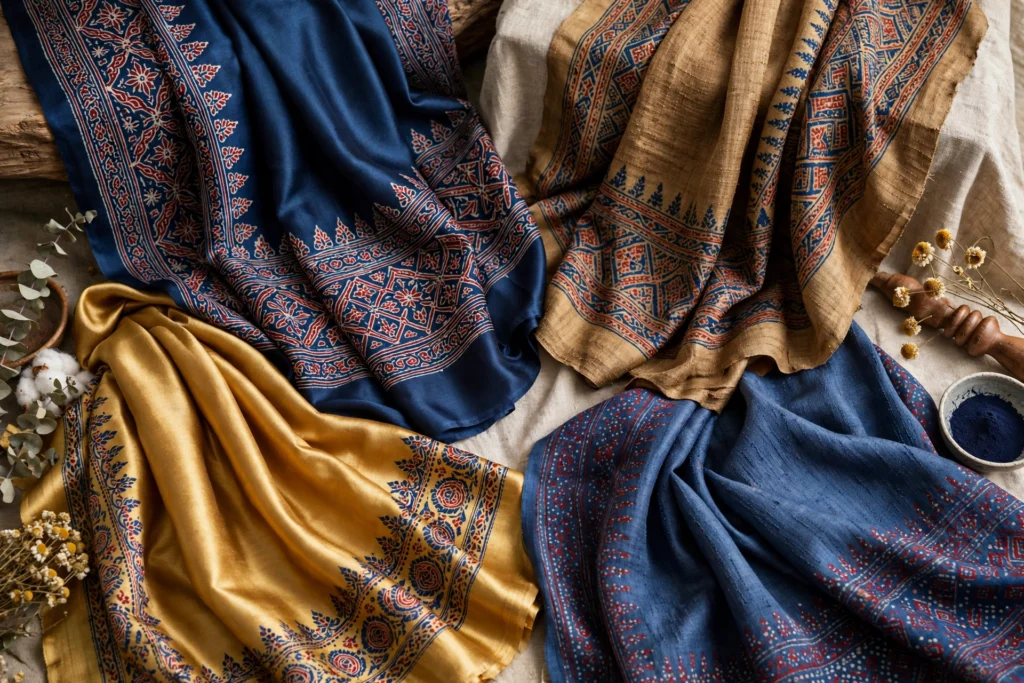
1. Katan Silk: When You Want Structure and Definition
Katan silk appeals to people who appreciate a saree with a composed silhouette. The fabric tradition uses silk yarns to create a relatively firm construction, although individual products vary according to their weaving methods, yarns and finishing.
Katan has a strong association with Varanasi silk weaving. Its structured character can support defined pleats and create a formal appearance, depending on the particular fabric.
For Ajrakh-inspired designs, Katan offers an interesting combination. The fabric can provide a refined background, while geometric prints introduce visual movement.
The Relationship Between Katan and Geometric Patterns
Geometric designs rely on repeated shapes, measured spacing and contrasting lines. A relatively smooth Katan surface can provide a suitable foundation for these elements when the artisan selects a compatible printing process.
Consider a saree with a deep indigo body, rust-colored motifs and a carefully arranged border. The contrast between the colours creates visual depth, while the fabric’s structure helps the saree maintain its shape.
A simpler design can work equally well. Small repeated motifs across the body and a more detailed border can create balance without overwhelming the fabric.
Still, buyers should not assume that every Katan saree offers the same print definition. The artisan’s preparation methods and the fabric’s surface condition influence the final result.
What Should You Check Before Buying Katan?
Look beyond the fabric name and examine the actual product.
- Check the stated silk composition and any applicable authenticity certification.
- Review close-up photographs of the motifs and border.
- Ask whether the fabric feels lightweight, medium-weight or heavy.
- Confirm whether the design uses hand-block printing or another method.
- Read the care instructions before choosing a saree for frequent wear.
Katan may suit shoppers who prefer structured pleats, formal styling and a refined appearance. If you want a softer, more visibly textured surface, compare it with Tussar before deciding.
2. Tussar Silk: A Fabric With Natural Character
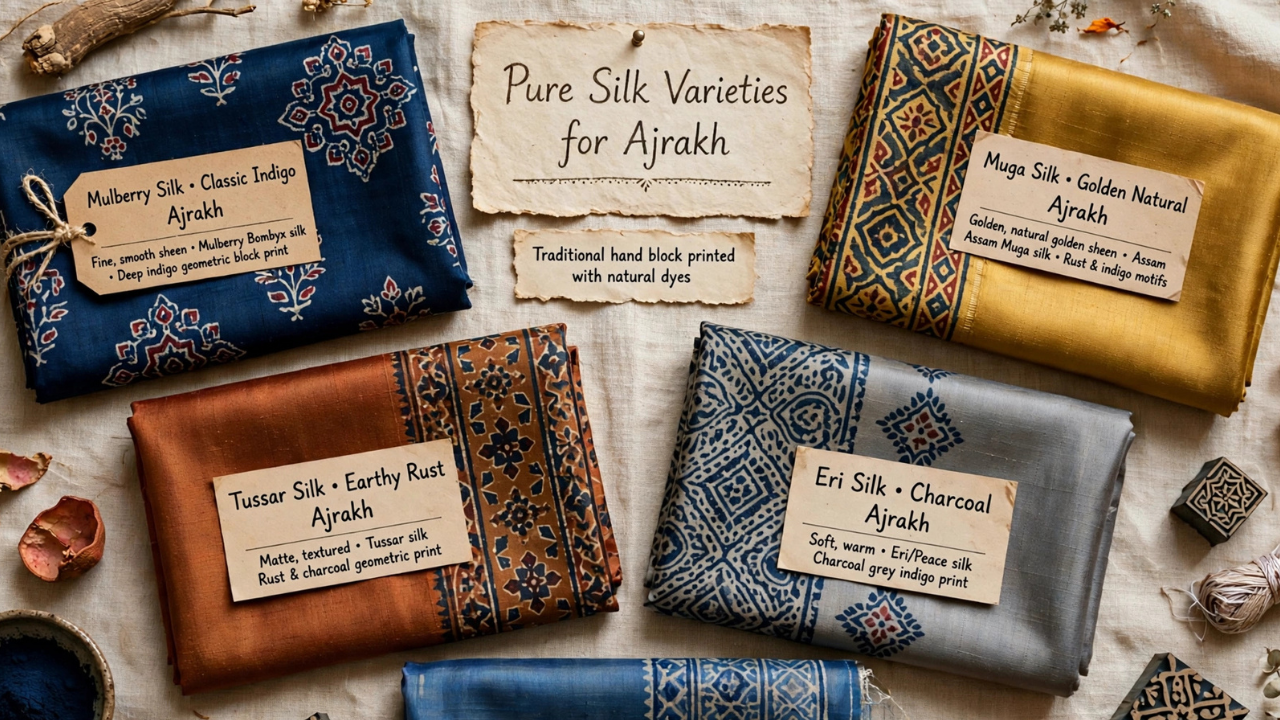
Tussar silk brings a different visual quality to traditional-inspired sarees. Producers obtain it from several wild silk moth species, and many Tussar fabrics display a noticeable texture rather than the uniformly smooth surface associated with some other silk fabrics.
This texture gives the material character even before a designer adds a pattern.
Some shoppers prefer Tussar because it does not rely entirely on shine to attract attention. Its surface, natural colour variations and overall finish can create a more understated appearance.
Why Tussar Can Suit Ajrakh-Inspired Designs
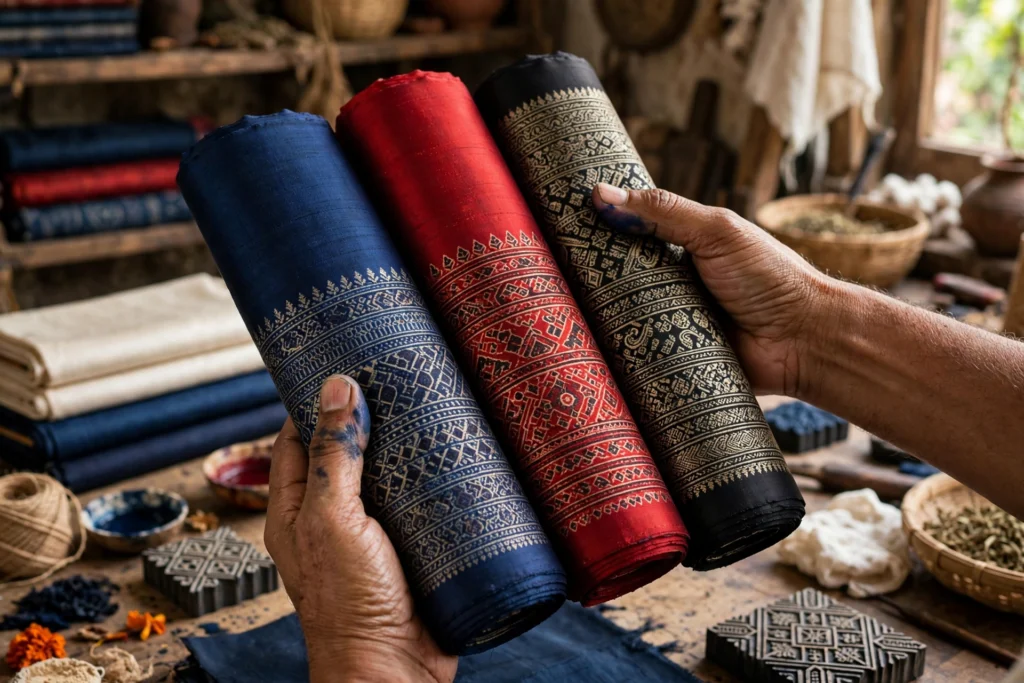
Ajrakh-inspired patterns often feature repeated geometry, contrasting borders and colours such as indigo, black, rust, maroon and cream. These design elements can complement the earthy character of Tussar silk.
A textured background may give the pattern a softer visual effect. Rather than creating an entirely polished appearance, the combination can highlight the relationship between the fabric and the motif.
However, Tussar’s texture presents practical considerations for printing. An artisan must understand how the particular fabric accepts the selected dye and resist materials. Surface irregularities, fabric preparation and processing conditions can influence the final appearance.
Traditional Ajrakh printing also involves multiple stages, so artisans must choose methods that suit the silk’s properties. Buyers should ask about the actual production process instead of assuming that every printed Tussar saree follows traditional Ajrakh techniques.
Choosing Tussar for Everyday and Special Occasions
Tussar can suit several occasions, but the fabric’s weight and construction matter.
For daytime gatherings, you might prefer a saree with an earthy palette and a relatively simple border. For a family celebration, a richer colour combination or a more elaborate blouse can create a dressier appearance.
You can also style a Tussar saree with understated jewelry to keep the focus on its texture and printed design.
If you prefer a fabric that looks distinctive without relying on a highly glossy finish, Tussar deserves consideration. Before ordering, check the product’s weight, drape and care requirements.
3. Mulberry Silk: A Smooth Canvas for Colour
Mulberry silk offers a different experience from the textured appearance of many Tussar fabrics. Producers obtain it mainly from domesticated silkworms that feed on mulberry leaves. These silkworms produce fibers that can create fine, relatively uniform yarns.
Many Mulberry silk fabrics display a smooth surface and natural luster. Their exact appearance depends on the weave, yarn quality and finishing process.
For shoppers who want a fluid drape or a refined finish, Mulberry silk can be an attractive option.
How Does Mulberry Silk Influence an Ajrakh Design?
A smooth fabric surface can complement intricate motifs and strong colour contrasts. Designers can pair Mulberry silk with geometric patterns that create a clear visual rhythm across the saree.
Colour selection also influences the final effect. Deep indigo can create a dramatic appearance, while rust and cream can introduce warmth. Maroon and black can provide a richer contrast for formal styling.
The fabric’s luster changes how light interacts with the colours. A saree may appear different in daylight, indoor lighting and photographs, so examine available product images carefully.
Nevertheless, Mulberry silk does not automatically produce better prints than Katan or Tussar. The artisan must select an appropriate printing process, prepare the fabric correctly and ensure that the dyes work with the material.
Is Mulberry Silk the Right Choice for You?
Consider Mulberry silk if you value smoothness, natural luster and a graceful drape. A lightweight fabric may suit flowing pleats, while a denser weave can provide more structure.
For a wedding or evening event, a carefully designed silk saree can create an elegant appearance without requiring excessive embellishment. For other occasions, a simpler print may allow the fabric’s natural finish to stand out.
Before purchasing, check whether the product uses pure Mulberry silk or a blend. The word “Mulberry” identifies the silk source; it does not guarantee a particular weave, weight or level of quality.
4. Silk Weaves: Why Construction Matters as Much as Fiber
The terms Katan, Tussar and Mulberry do not describe three identical categories of fabric.
Mulberry and Tussar refer primarily to silk sources, while Katan relates to a silk yarn and fabric tradition. The weaving process then determines how the yarns form the final textile.
This distinction helps shoppers understand why two sarees made from silk can behave very differently.
How Weaving Changes the Finished Saree
A fabric’s construction influences its density, flexibility and surface. A lighter weave may fall softly, while a denser weave may hold its shape more firmly.
The artisan’s finishing choices can also affect the material’s feel and appearance. Consequently, shoppers should avoid judging a saree solely by its fiber label.
Use these three checks when comparing products:
Fiber composition: Confirm which silk the manufacturer uses and whether the saree contains any other fibers.
Fabric construction: Look for information about the weave, weight and drape.
Surface treatment: Ask about finishes or treatments that may affect the fabric’s texture and printing performance.
These details help explain why one silk saree feels fluid while another feels structured, even when both carry traditional-inspired designs.
5. The Printing Challenge: Can Every Silk Produce the Same Ajrakh Result?
The short answer is no. Silk varieties differ in surface texture, yarn characteristics and construction, so artisans cannot assume that one printing recipe will produce identical results on every fabric.
Traditional Ajrakh printing uses carefully coordinated stages that may include fabric preparation, resist application, dyeing, washing and repeated block printing. Each stage influences the final pattern.
When artisans work with silk, they must consider the fiber’s sensitivity to processing conditions and the compatibility of the dyes and resist materials.
Fabric Preparation Comes First
Before printing, artisans must prepare the fabric so that it responds appropriately to the chosen process. The preparation method depends on the material and the intended result.
An unsuitable treatment can affect colour uptake or damage the fabric. For this reason, experienced artisans evaluate the particular silk rather than applying the same process without adjustment.
The Surface Influences Pattern Appearance
A smooth surface and a textured surface may display the same motif differently. Fine details can appear visually sharper on some fabrics, while texture can give a design a softer character.
However, surface texture alone does not determine the quality of a print. The condition of the wooden block, the consistency of its application, the printing materials and the artisan’s technique all matter.
Colour Compatibility Matters
Artisans must select dyes and processing conditions that suit the silk and the intended colour palette. Indigo, red and darker tones may require different approaches depending on the materials and process.
A buyer should not assume that every silk Ajrakh saree uses natural dyes simply because the seller describes the design as traditional. Ask the seller to confirm the dyeing method when this detail matters to your purchase.
6. Katan, Tussar or Mulberry: Which One Should You Buy?
Your ideal fabric depends on the qualities you value most. Instead of treating one variety as the universal winner, compare the options against your own requirements.
| Buying preference | Fabric to explore | Why it may suit you |
|---|---|---|
| Defined pleats and structure | Katan | Many constructions provide a relatively firm appearance |
| Natural texture and earthy character | Tussar | Its surface often displays visible texture |
| Smoothness and natural lustre | Mulberry | Many varieties offer an even surface and graceful drape |
| Detailed geometric motifs | Compare all three | Printing quality depends on the fabric and production process |
| A particular budget | Compare individual products | Price depends on composition, weaving, printing and finishing |
If You Prefer Traditional Formal Styling
Start by exploring Katan sarees with the structure and weight you prefer. Examine the border and motif arrangement to see whether the design complements the fabric.
If You Prefer an Earthy, Artistic Appearance
Look at Tussar sarees with colour combinations that complement the material’s natural character. Compare several products because texture and drape vary between constructions.
If You Prefer a Smooth, Flowing Drape
Explore Mulberry silk options and check their weight carefully. A lightweight version may drape differently from a heavier woven saree.
Ultimately, the specific product matters more than a simple ranking of the three varieties.
7. Pure Silk or Silk Blend? Read the Label Before You Buy
Product descriptions sometimes use broad terms such as silk, pure silk, silk blend and silk-like fabric. These terms do not necessarily describe the same material.
A pure silk saree uses silk as its textile fiber, while a blend combines silk with other fibers. A synthetic fabric may imitate the appearance of silk without containing natural silk fibers.
These differences can affect the fabric’s feel, drape, care requirements and price.
How to Verify the Product Information
Read the complete composition statement instead of relying only on the product title. If the listing does not provide clear information, contact the seller.
You can also look for applicable Silk Mark certification. The Silk Mark initiative helps consumers identify products certified as pure silk under its scheme.
Remember that a silk authenticity label does not independently verify the sarees printing technique. Confirm the fabric composition and the production method separately.
When buying online, review the seller’s return policy and check whether the product description includes clear photographs, measurements and care instructions.
8. Caring for a Silk Ajrakh Saree After Purchase
A silk saree deserves careful handling, especially when it features multiple colours or a detailed print.
Start by reading the care label. Different silk fabrics and printing methods may require different cleaning approaches, so avoid applying a universal washing rule.
If the manufacturer recommends dry cleaning, choose a professional cleaner who understands delicate silk textiles.
Keep the saree away from bleach, harsh detergents and aggressive scrubbing. These can damage fibers or affect the printed surface.
Store the fabric in a clean, dry place, and avoid prolonged exposure to direct sunlight. Refold it periodically to prevent permanent creases from forming along the same lines.
If you plan to wear the saree frequently, ask about maintenance before buying it. Care requirements can influence whether a particular fabric suits your lifestyle.
9. What Should You Look for in an Online Silk Ajrakh Listing?
A useful product page should help you understand the saree before you place an order.
Check for the following information:
- Fabric composition: Does the seller clearly identify the silk variety?
- Printing technique: Does the description explain whether the design uses hand-block printing or another method?
- Product photographs: Can you examine the body, border and fabric surface closely?
- Saree measurements: Does the listing specify the length and any included blouse piece?
- Care instructions: Does the seller explain how to maintain the fabric?
- Return policy: Can you review the conditions before completing your purchase?
Price deserves attention, but it should not become your only deciding factor. Compare the actual specifications, craftsmanship claims and seller information before making a decision.
10. Explore Silk Ajrakh Sarees at Kancholika
The right silk can help a saree express a particular mood. Katan can provide structure, Tussar can introduce natural texture, and Mulberry silk can offer a smooth, lustrous finish.
Each variety has its own appeal, and none guarantees superior Ajrakh printing on its own. Fabric preparation, weaving, dye compatibility and artisan technique all contribute to the final result.
When exploring traditional-inspired sarees at Kancholika, consider how the fabric will look and feel when you wear it. Review the composition, check the printing description and choose a design that matches your occasion.
A thoughtful purchase begins with accurate product information. Once you understand the fabric, you can focus on the colours, motifs and details that make a saree feel right for you.
Frequently Asked Questions
Which silk works best for Ajrakh sarees?
Katan, Tussar and Mulberry silk can all work with suitable Ajrakh printing methods. Choose Katan for a more structured appearance, Tussar for natural texture or Mulberry for a smooth finish. The individual fabric and printing process determine the final result.
Does Tussar silk have a rough texture?
Tussar often displays a more visible texture than many smooth silk fabrics, but its feel varies by weave and finishing. Check the specific product description and photographs before buying.
Can Mulberry silk hold detailed prints?
Mulberry silk can work with suitable printing processes. The clarity and durability of the design depend on fabric preparation, dye compatibility and the artisan’s technique.
What is the difference between Katan and Mulberry silk?
Katan describes a silk yarn and fabric tradition associated with structured silk construction, while Mulberry identifies the source of the silk fiber. The terms therefore describe different aspects of the material.
How do I check whether a silk Ajrakh saree is authentic?
Review the fabric composition, check for applicable Silk Mark certification and ask the seller about the printing method. Verify the silk claim separately from the claim that the saree uses traditional Ajrakh printing.
Are all Ajrakh-inspired silk sarees hand-block printed?
No. Some use traditional hand-block printing, while others use digital printing or different techniques. Check the product description if you specifically want a hand-block printed saree.
Which silk should I choose for a wedding?
Choose according to the sarees construction, weight, design and your comfort. Katan may appeal to you for structured styling, Tussar for an earthy look, and Mulberry silk for a smooth, graceful finish.
Choose Your Silk With Confidence
A good silk Ajrakh saree combines a fabric you enjoy wearing with a design that suits your personal style. Learn about the material, verify the printing method and compare product details before you buy.
Explore the traditional-inspired saree collection at Kancholika and select a design that complements your wardrobe and the occasions you want to celebrate.