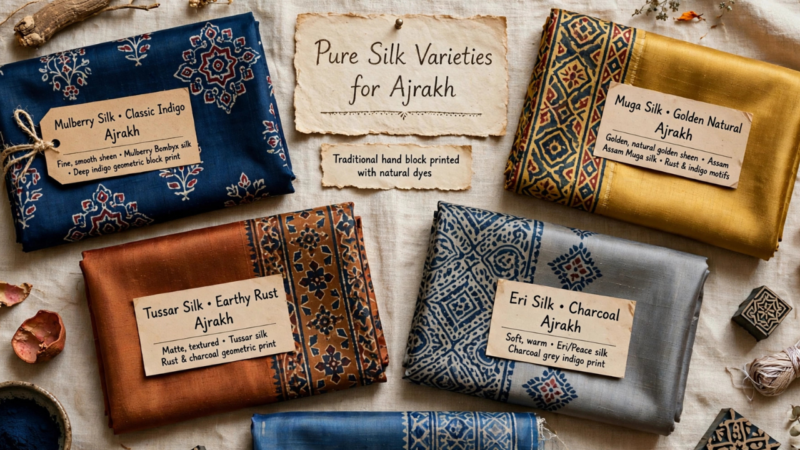

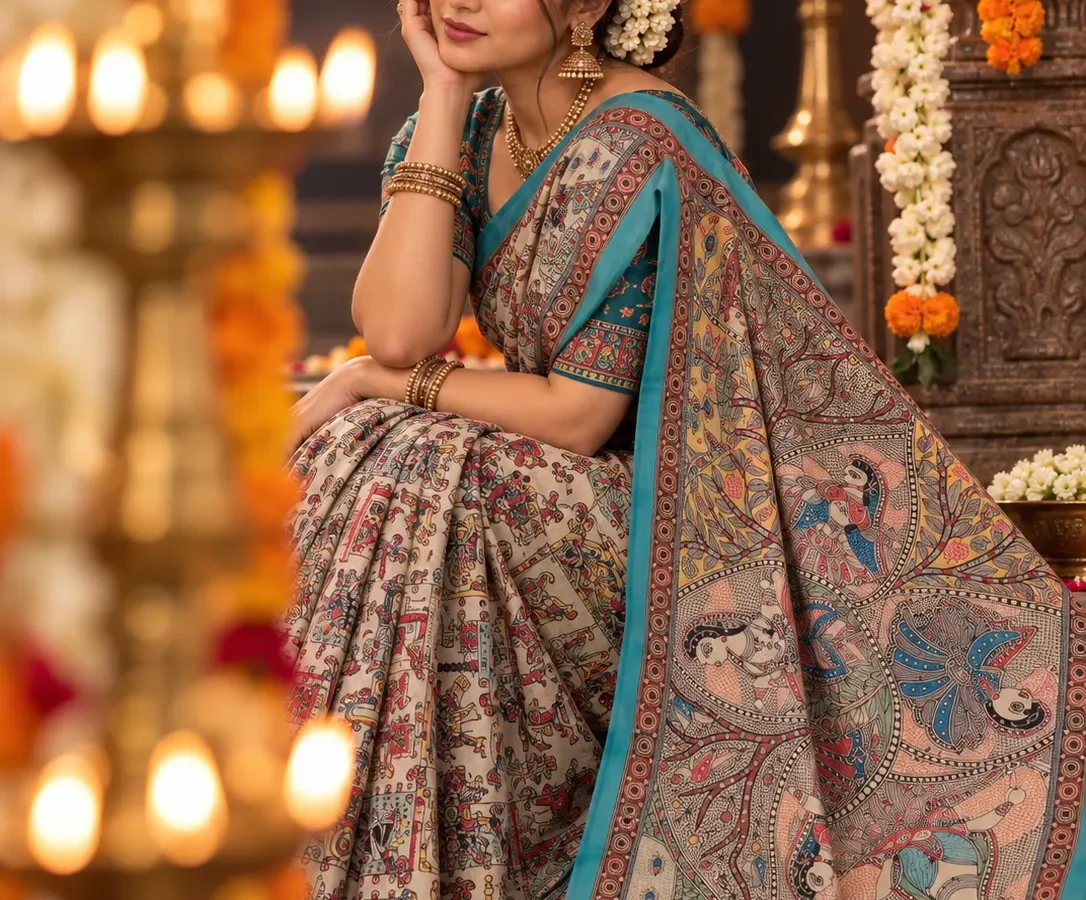
Ajrakh is more than a beautiful textile print. It represents centuries of Indian textile heritage, skilled craftsmanship, traditional dyeing and block-printing techniques.
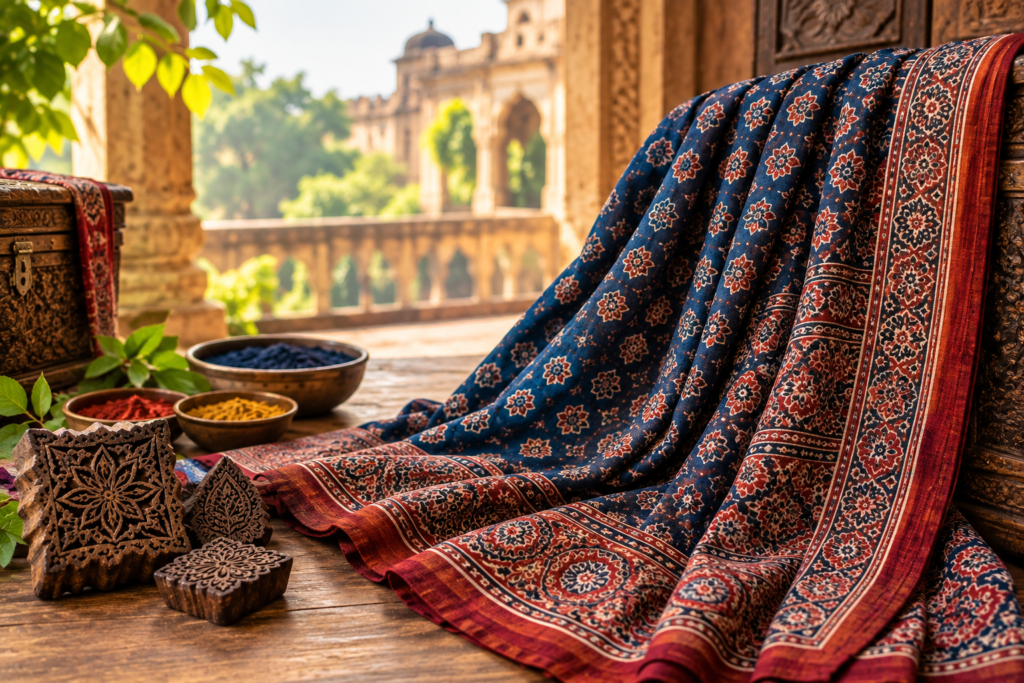
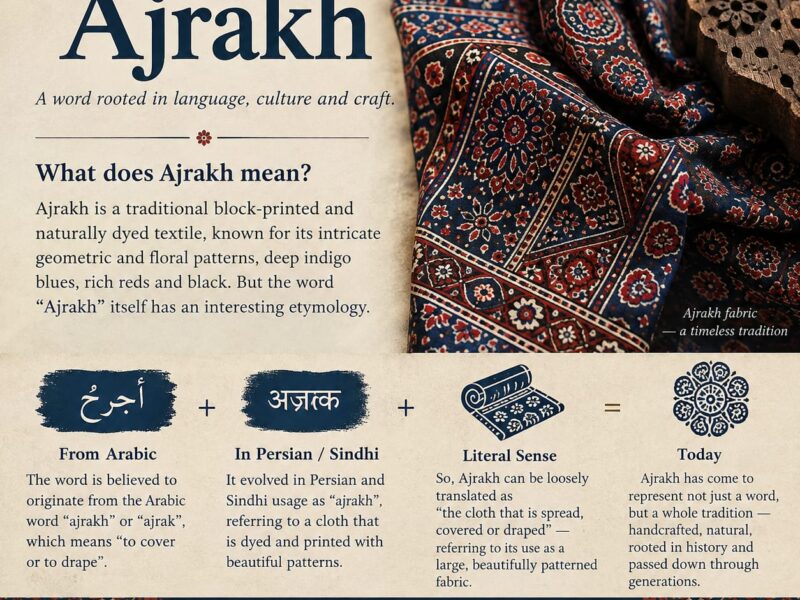
Ajrakh is a traditional textile known for its intricate geometric and floral patterns, Artisans create these designs through block printing and dyeing.
associated with deep indigo, red, black and white shades.
The craft has deep connections with the Kutch region of Gujarat and Sindh. Traditional Ajrakh printing has been practiced by Khatri artisan communities for generation.
Originate & Cultural Significance
The history of Ajrakh is closely connected with the regions around the Indus River. Researchers have linked the tradition to the long history of textile dyeing and printing in
the Indus Valley region.
Ajrakh artisans from Sindh later migrated to Kutch, Gujarat, where the craft developed into one of the region’s best-known textile traditions. Dhamadka and Ajrakhpur became important centers for Ajrakh printing.Ajrakh and Its Cultural Heritage
Ajrakh traditionally served the clothing needs by pastoral communities in regions such as Kutch and Sindh. It was commonly worn in forms such as turbans, shoulder cloths and wrapped garments.
Over time, the craft moved beyond its traditional use and became part of contemporary Indian fashion. Its distinctive geometric and floral patterns have helped Ajrakh remain relevant
while retaining its connection to its cultural roots.
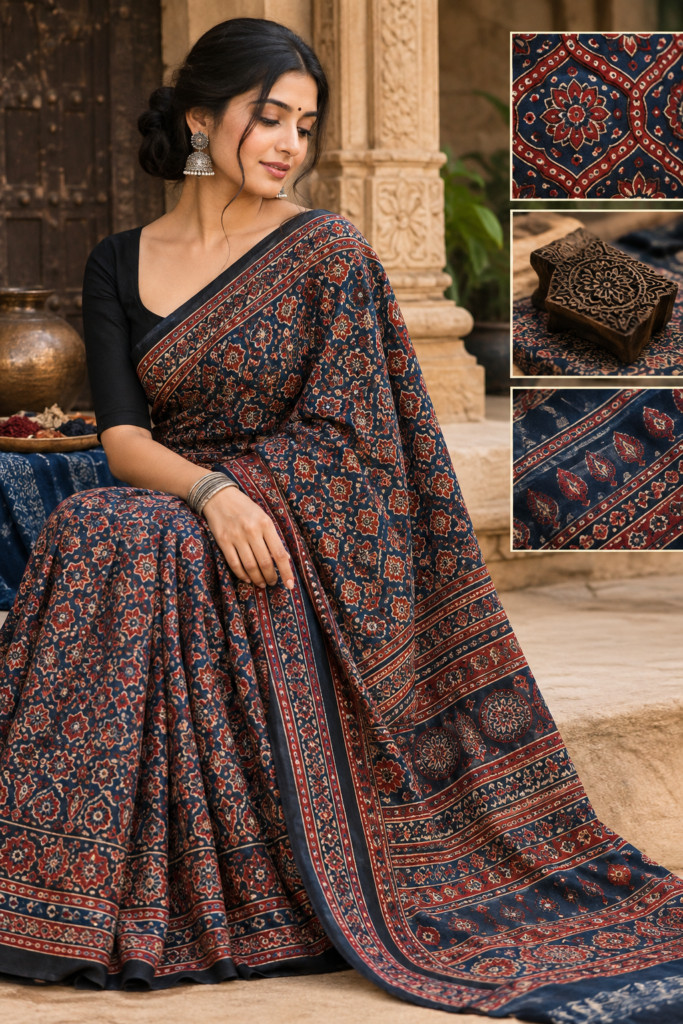
Ajrakh : What makes it special and how its Legacy is preserved
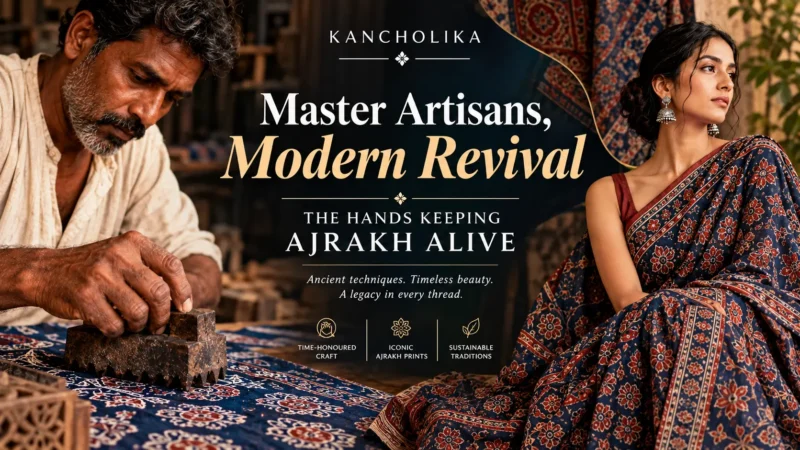
It is the combination of heritage, craftsmanship and design. Artisans use several stages to create traditional Ajrakh. resist dyeing, mordanting, washing and block printing. In traditional practice, Traditional Ajrakh printing can also involve printing on both sides with carefully aligned patterns—a highly skilled process. Every geometric shape and repeated motif contributes to the visual identity of the textile.
The continued popularity of Ajrakh helps keep attention on the artisans, techniques and cultural knowledge associated with the craft. Academic and textile research continues to explore Ajrakh’s development from traditional regional dress into a widely recognized fashion textile while remaining an important cultural asset.
Ajrakh in Contemporary sarees : A Timeless craft for the modern era
Today, the traditional language of Ajrakh has found its way into modern Indian fashion, including sarees. This allows the craft to be appreciated not only as a piece of textile history
but also as something that can be incorporated into contemporary wardrobes.
For a saree brand such as Kancholika, understanding the heritage behind Ajrakh adds meaning to the textile beyond its colours and patterns. An Ajrakh saree can represent
the connection between traditional Indian craftsmanship and modern fashion.