
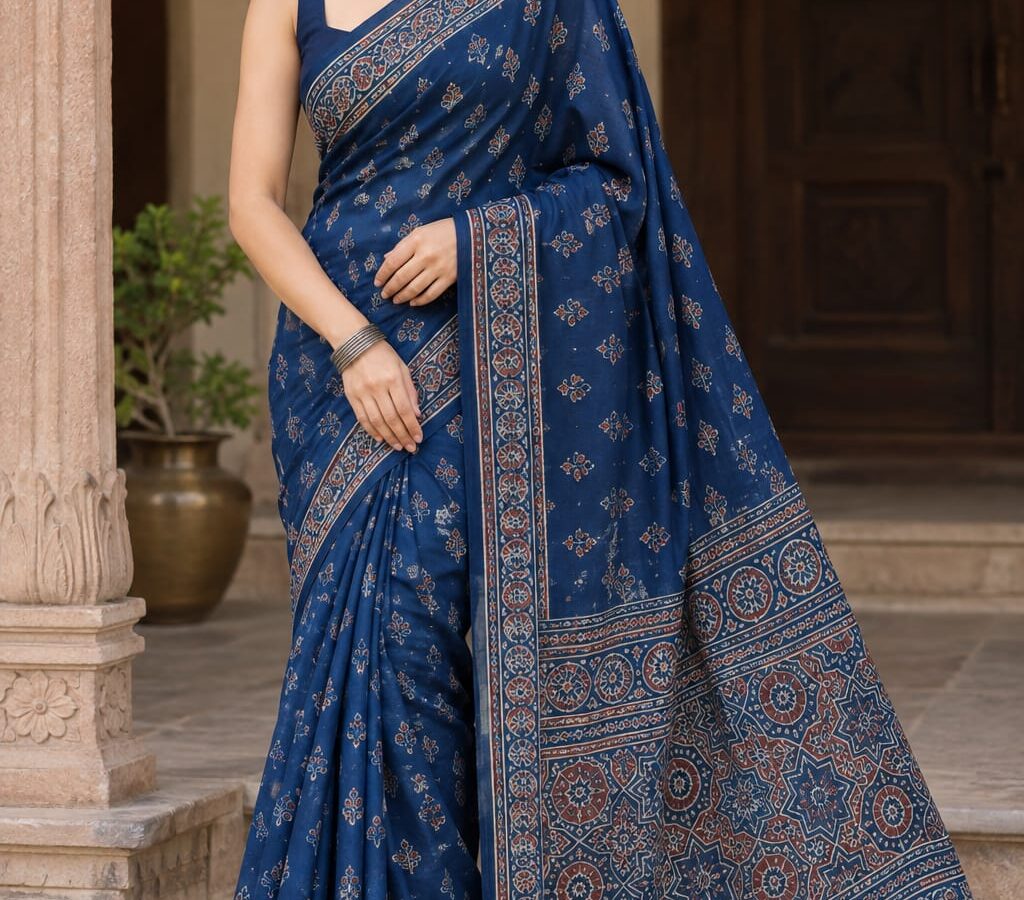
The Ajrakh saree belongs to the second category. With its deep indigo shades, earthy reds, geometric patterns, and handcrafted character, Ajrakh is much more than a beautiful Indian textile. It is a story of artisans, natural colors, traditional printing techniques, and a relationship between people and the earth that has continued for generations.
Today, Ajrakh sarees are finding a place in contemporary wardrobes, but their beauty comes from a craft tradition that has been carefully preserved over centuries.
Indigo: The Color With Depth
: Deep indigo blue
: Brick and madder red
: Black and earthy brown
: White and cream details
: Repeating geometric patterns
: Floral and traditional motifs
: Symmetrical compositions
: Handcrafted variations
Unlike machine-made prints, handmade Ajrakh carries tiny variations from one piece to another. These differences are not flaws; they are evidence of the human hands behind the fabric.
The Connection Between Earth and Ajrakh
The name of this craft is often associated with the idea of keeping something for a long time. That idea beautifully represents Ajrakh itself.Traditional Ajrakh printing depends heavily on natural materials and careful craftsmanship. Natural dyes and mordants have historically played an important role in
creating its characteristic colors.
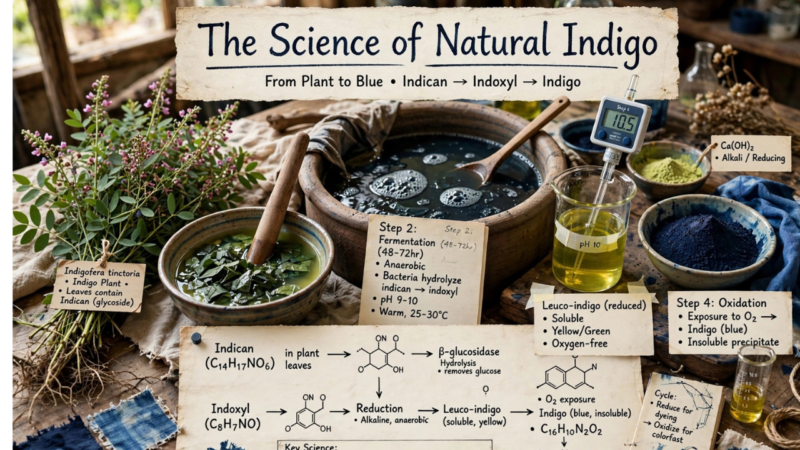
The famous indigo blue is especially and why its important.
Indigo comes from plants and produces the rich blue shades that have become one of Ajrakh’s strongest visual identities. Red shades may be developed using natural dye sources such as madder, while other colors and shades emerge through carefully controlled dyeing and resist processes.The result is a palette that feels connected to soil, plants, water, and sunlight.Indigo is not simply a color in Ajrakh.
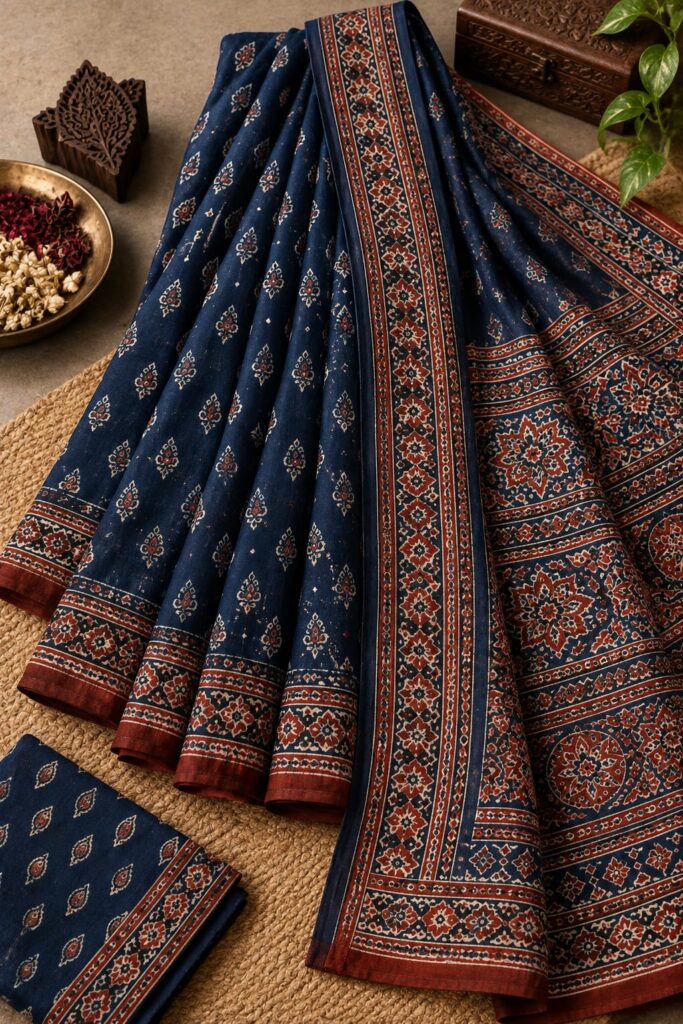
A dark indigo Ajrakh saree can appear almost black in some areas and reveal a luminous blue when it catches the light. This changing character gives the fabric a remarkable visual richness.
: The color also creates a beautiful contrast with red, white, and earthy tones.
: This is why an Ajrakh saree can look traditional and contemporary at the same time.
The Timeless Beauty of Handmade Ajrakh
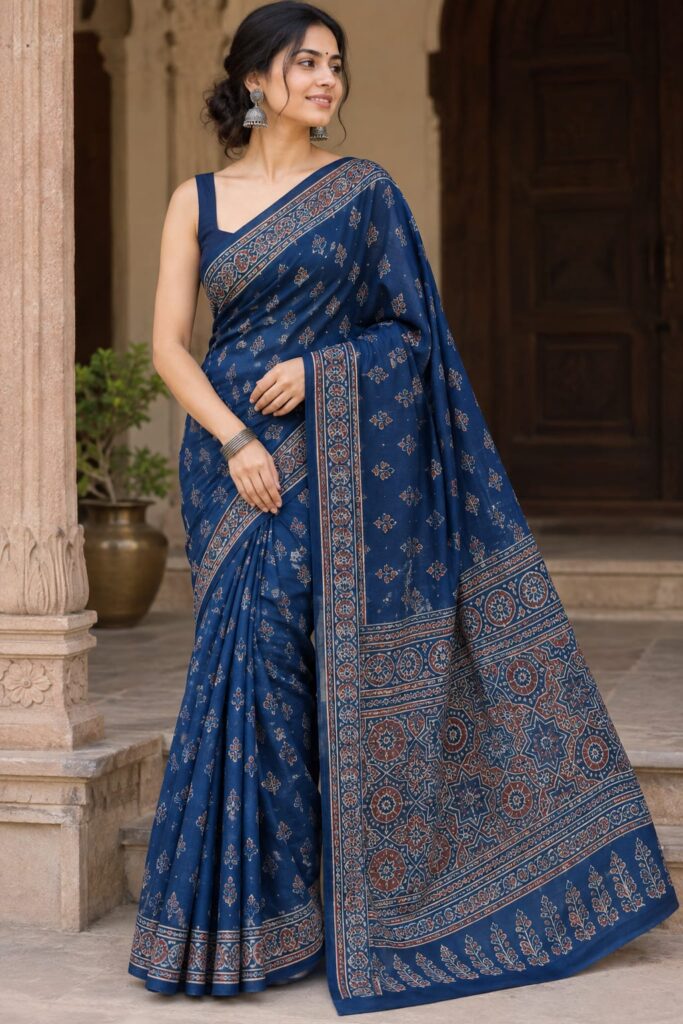
One of the charms of an Ajrakh saree is that it does not always look perfectly identical from one piece to another. Small variations in printing, color, or alignment can occur because the textile is made by hand. These differences are part of its identity. They show that the saree has passed through human hands rather than being produced entirely by machines. The intricate borders and repeating motifs also give Ajrakh a timeless quality that works beautifully in both traditional and contemporary fashion.
Today, Ajrakh is not limited to traditional clothing. It can be seen in sarees, dupattas, kurtas, dresses, jackets, and other modern textiles. Its ability to fit into contemporary fashion while retaining its traditional character has helped keep the craft relevant. More importantly, Ajrakh reminds us that good craftsmanship takes time. Earth provides the inspiration, indigo gives it color, artisans give it form, and time gives it meaning.
A Heritage Woven Through Time
An Ajrakh saree is more than a beautiful piece of clothing. It is a connection between nature, craftsmanship, culture, and time a tradition that continues to tell its story every time it is worn.