
Fashion has always been more than clothing. It carries memories, reflects culture, responds to changing lifestyles, and sometimes quietly challenges the rules people have followed for generations. One of the most interesting examples of this change can be seen in the growing relationship between menswear and the sarees.
The sarees has traditionally been associated with femininity, while menswear has often been shaped around shirts, trousers, jackets, kurtas, and other structured garments. But fashion rarely stays inside fixed boundaries. Today, designers, artists, performers, and everyday wearers are experimenting with the sarees in ways that make us look at the garment differently.
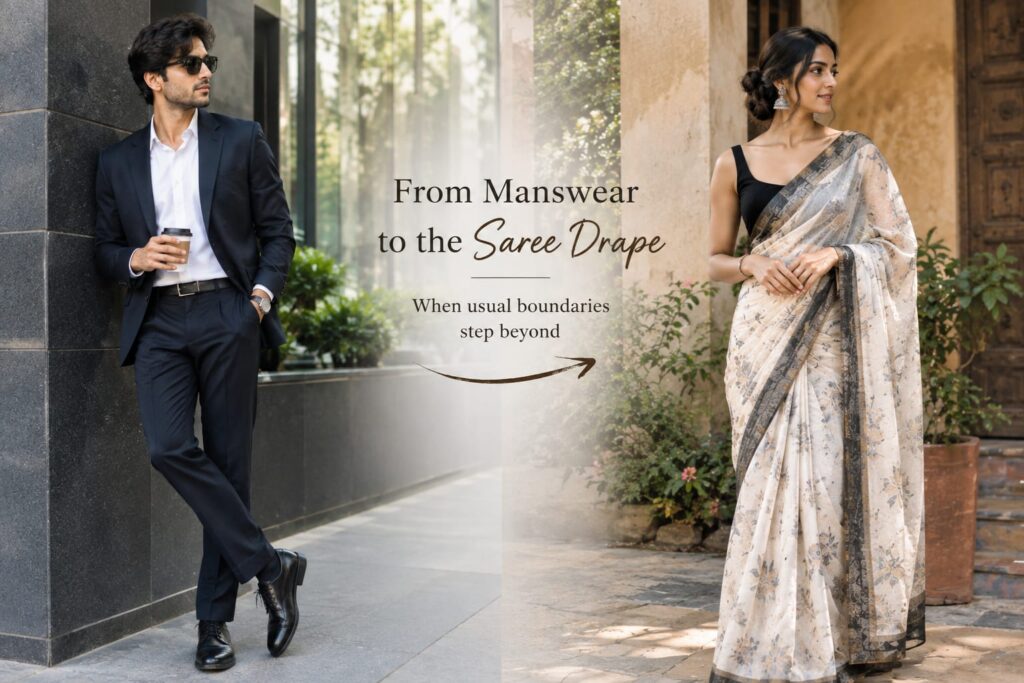
The idea of moving from menswear to the sarees drape is not simply about a man wearing a sarees. It is about understanding how clothing can move between identities, occasions, silhouettes, and personal styles. A sarees can be elegant, dramatic, minimal, comfortable, powerful, traditional, or contemporary depending on how it is styled.
This shift also reminds us that the beauty of Indian clothing lies in its ability to evolve without completely losing its connection to heritage.
The Changing Language of Modern Dressing
For a long time, clothing was divided into clear categories. Certain garments were considered masculine, while others were considered feminine. These divisions were influenced by culture, society, occupation, practicality, and changing ideas of respectability.
Menswear generally developed around structure. Shirts had collars, trousers followed straight lines, jackets created defined shoulders, and formal clothing often communicated discipline and authority. Sarees, on the other hand, were built around fluidity. The fabric wrapped, folded, pleated, tucked, and moved with the body.
These differences make the meeting of menswear and sarees draping particularly interesting.
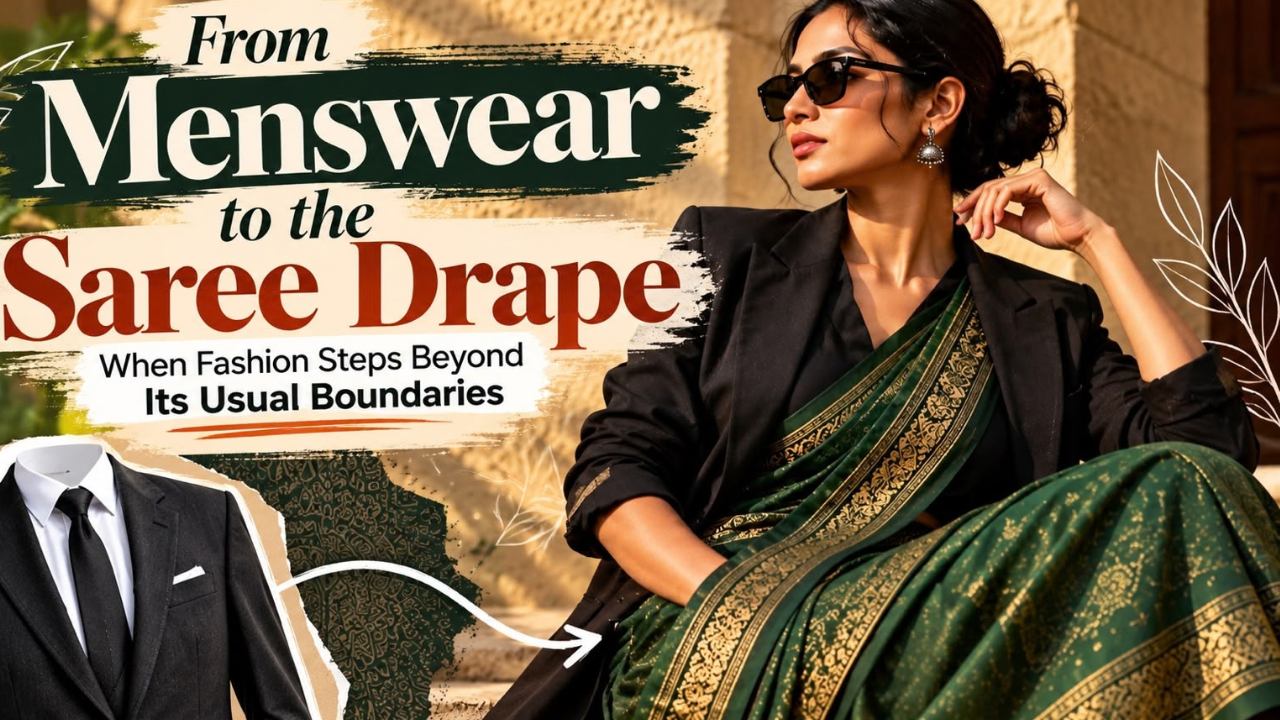
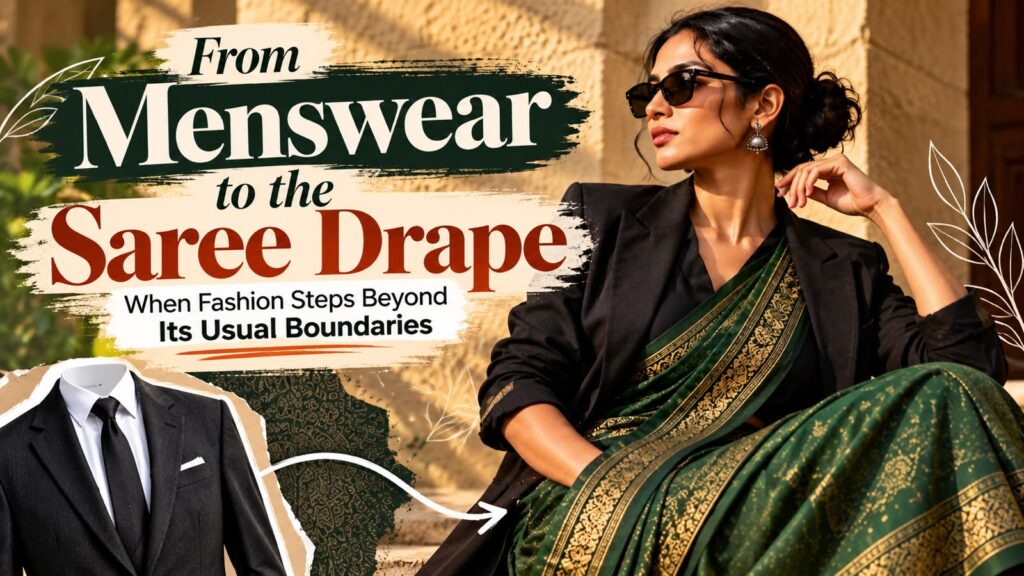
When elements of menswear enter sarees styling, the result can feel completely different. A crisp shirt may replace a conventional blouse. A blazer can become part of the drape. A belt can define the waist. Boots can replace traditional footwear. Even a simple white shirt paired with a richly woven sarees can create a strong contrast between masculine tailoring and the softness of draped fabric.
The clothing is still recognizably a sarees, but the language surrounding it has changed.
The Sarees Was Always More Flexible Than We Thought
One reason the sarees adapts so easily to contemporary fashion is its construction.
Unlike a stitched dress or a pair of trousers, a sarees is essentially a long piece of fabric that can be arranged in different ways. The wearer controls much of its final shape through pleating, wrapping, tucking, and draping.
That flexibility has allowed regional communities across India to develop different draping traditions over centuries. The Nevi drape, Bengali drape, Gujarati drape, Maharashtrian drape, Kodak style, Nauvari, and many other forms show that there has never been just one universal way to wear a sarees.
This history is important when discussing modern experimentation.
Contemporary sarees styling is not creating flexibility from nothing. It is continuing a much older tradition of adapting clothing to the needs and identities of different communities.
The modern movement simply introduces new influences, including tailoring, streetwear, formal menswear, and global fashion.
From Shirt to Blouse: The First Change in the Silhouette
Perhaps the easiest way to see the connection between menswear and sarees styling is through the blouse.
Traditional sarees styling often uses a blouse designed specifically to complement the sarees. But modern styling frequently experiments with shirts instead.
A plain cotton shirt tucked into a sarees can create a relaxed everyday look. A striped shirt can introduce a slightly formal appearance. An over sized shirt can make the drape feel more contemporary, while a fitted shirt can give the outfit a sharper silhouette.
The appeal comes from contrast.
The sarees provides movement and softness, while the shirt brings structure.
This combination also shows how fashion can communicate personality without requiring an entirely new wardrobe. Someone who already feels comfortable wearing shirts, trousers, or tailored jackets can introduce the sarees through familiar pieces.
Instead of abandoning personal style, the sarees becomes another layer of it.
Tailoring Meets Draping
Menswear has traditionally been closely associated with tailoring. Tailored clothing depends on precise measurements, seams, construction, and defined shapes.
The sarees works differently. Its beauty often comes from the absence of rigid construction.
When these two approaches meet, something visually interesting happens.
Imagine a deep indigo sarees paired with a sharply cut black blazer. The blazer creates a structured upper body while the sarees falls freely below. Or consider a hand-block printed sarees styled with a crisp button-down shirt and leather belt. The result does not erase the identity of either garment.
Instead, the two styles speak to each other.
This kind of styling is particularly appealing to people who prefer clothing that feels polished but not overly traditional. It allows the sarees to enter spaces where a conventional drape might feel too formal or ceremonial.
A sarees can suddenly become suitable for a creative workplace, an exhibition, a fashion event, a dinner, or even a casual gathering.
The Drape Becomes a Personal Language
One of the most beautiful things about sarees styling is that there is no single correct way to create a contemporary look.
Some people prefer a tightly pleated drape with a clean silhouette. Others allow the pallu to fall freely. Some use belts to hold everything in place, while others prefer the traditional fall of the fabric.
The way a sarees is draped can communicate personality.
A minimalist wearer might choose a solid-colored sarees with a simple shirt. Someone who loves dramatic fashion may select a heavily textured sarees with a structured jacket. Another person may combine sneakers with a handwoven sarees simply because comfort matters more than convention.
The garment remains the same, but the story changes with the wearer.
This is why modern sarees fashion should not be understood only through the question of whether it looks traditional. A better question is whether the styling feels intentional and meaningful to the person wearing it.
The Quiet Harmony Between Tailored Lines and Draped Fabric
There is a practical reason behind the popularity of menswear-inspired sarees styling: balance.
A sarees can sometimes create a visually rich outfit because of its prints, borders, embroidery, texture, and flowing fabric. Pairing it with a simpler menswear-inspired piece can prevent the overall look from becoming overwhelming.
A plain shirt can give a printed sarees breathing space.
A tailored blazer can provide shape to a soft silk drape.
A belt can visually organize multiple layers.
A pair of structured shoes can add an unexpected finishing touch.
These combinations are not about making the sarees masculine or making menswear feminine. They are about using different visual languages together.
Fashion does not always need one category to dominate another.
Sometimes the most memorable outfits are created when contrasting ideas are allowed to coexist.
Beyond Gender: Rethinking Who Gets to Wear What
The conversation around sarees and menswear also raises a larger question about gender and clothing.
Clothes themselves do not have personalities. People give them meanings.
A shirt is not inherently masculine. A sarees is not inherently feminine. These associations are created by societies over time, and they can change as people adopt new ways of dressing.
Across history, many garments that are considered strongly gendered today have been worn differently in different regions and periods.
That is why contemporary sarees styling can be viewed as part of a broader evolution in fashion. People increasingly want clothing that reflects their personality rather than forcing them into a predetermined category.
For some, wearing a sarees may be a cultural connection. For others, it may be an artistic choice. For someone else, it may simply be a comfortable and beautiful garment.
There does not have to be one reason.
The Importance of Fabric in a Modern Drape
The fabric can completely change the relationship between menswear and sarees styling.
Cotton sarees work naturally with casual shirts because both garments can create an easy, breathable appearance. Linen offers a slightly more relaxed and contemporary character. Silk can bring richness and formality. Handwoven fabrics introduce texture and craftsmanship.
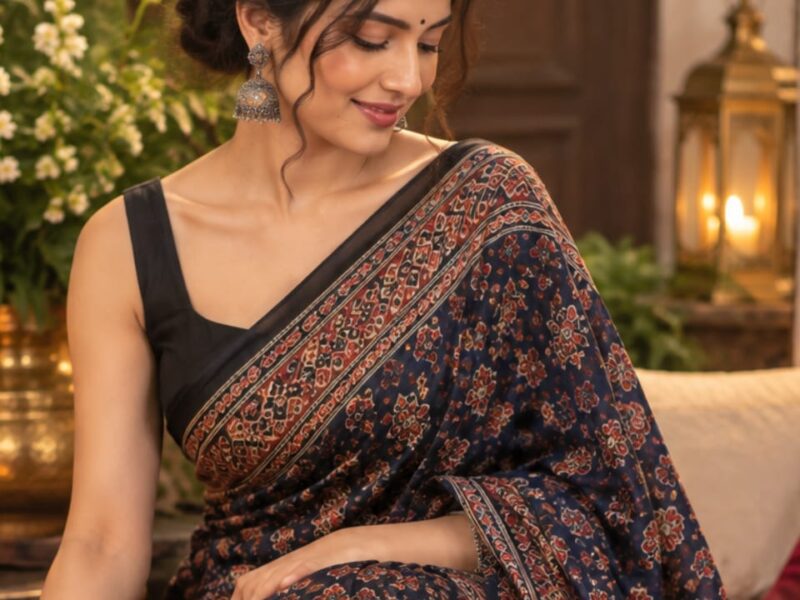
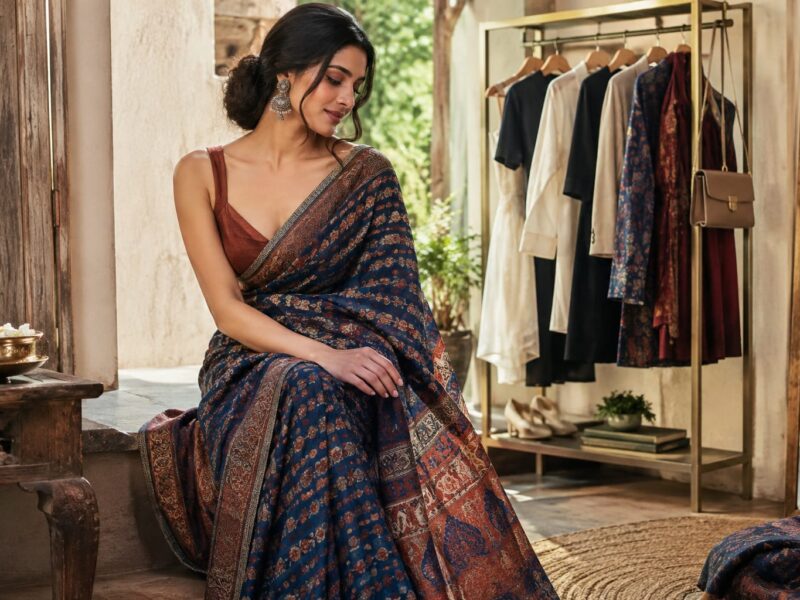
Ajrakh, for example, can create an especially interesting combination with structured clothing. Its deep colors, repeating patterns, and handcrafted character can stand beautifully against a simple white shirt, neutral blazer, or understated jacket.
The contrast allows the textile to remain the focus.
This is particularly valuable for traditional textiles. Modern styling does not necessarily require changing the textile itself. Sometimes all that is needed is a different way of presenting it.
The fabric carries its history while the styling brings it into the present.
From Traditional Wardrobe to Everyday Fashion
For many people, sarees are still associated with weddings, festivals, family celebrations, religious occasions, and formal events.
But contemporary styling is gradually expanding those boundaries.
A lightweight cotton sarees can be worn during the day. A simple printed sarees can work for an informal gathering. A structured shirt can make the look suitable for a creative workplace. Sneakers can make walking easier. A belt can provide practical support while adding a modern detail.
These changes matter because clothing survives when people can live in it.
Traditions remain meaningful when they are allowed to adapt to real life.
If a garment can only be worn on special occasions, it may slowly become disconnected from everyday wardrobes. But when people discover new ways to wear it, the garment becomes part of contemporary life without losing its cultural value.
The Rise of the Gender-Neutral Wardrobe
The growing interest in gender-neutral fashion has also influenced how people think about sarees.
A gender-neutral wardrobe does not necessarily mean that every garment must look identical on every person. Instead, it questions the idea that certain clothes should automatically belong to one gender.
This creates room for experimentation.
A sarees can be draped differently depending on body shape, movement, comfort, and personal preference. A shirt can be over sized or fitted. A blazer can be layered over the pallu. Accessories can be minimal or expressive.
The focus shifts from following a prescribed formula to creating a look that feels natural.
For younger fashion audiences especially, this freedom can make traditional garments feel less distant. Instead of viewing heritage clothing as something that belongs only to previous generations, they can reinterpret it through their own wardrobes.
Styling Without Losing the Soul of the Sarees
Modernization does not mean removing everything traditional.
There is a difference between reinterpretation and erasure.
If a sarees is covered with so many modern additions that the textile itself disappears, the original character of the garment can become difficult to appreciate. Thoughtful styling works differently.
It creates space for both old and new.
A handwoven sarees can remain the centerpiece while the shirt provides a contemporary layer. Traditional jewelry can be paired with modern footwear. A classic drape can be finished with a structured jacket.
The goal is not to make the sarees something it is not.
The goal is to discover what else it can be.
The Role of Accessories
Accessories can completely change a sarees styled with menswear elements.
A leather belt can create a clean waistline. A watch can reinforce the structured character of the outfit. Loafers or boots can add a formal edge. Sneakers can make the appearance more relaxed.
Jewelry can also be approached differently.
Instead of wearing multiple traditional pieces, someone might choose a single statement ring, geometric earrings, a simple chain, or a watch. Alternatively, traditional jewelry can deliberately be used to create contrast with a masculine-inspired shirt or blazer.
The important point is balance.
When the sarees already has a strong print or border, accessories can remain understated. When the sarees is plain, accessories can become the detail that gives the outfit personality.
Comfort Has Become Part of Fashion
Another reason contemporary sarees draping has become popular is the growing importance of comfort.
Modern fashion is increasingly expected to work with real lifestyles.
People travel, commute, work long hours, attend multiple events, and move between formal and informal settings. Clothing that looks beautiful but prevents comfortable movement can be difficult to incorporate into everyday life.
This is where experimental draping becomes useful.
Per-pleating, belts, practical footwear, shirts, jackets, and different draping techniques can make a sarees easier to manage.
The modern wearer is not necessarily rejecting tradition.
They are asking tradition to fit into contemporary life.
Social Media and the New Sarees Vocabulary
Social media has played an important role in making unconventional sarees styling visible.
Earlier, fashion inspiration was largely controlled by magazines, television, films, designers, and fashion shows. Today, individuals can share their own styling ideas with audiences around the world.
A person wearing a sarees with a blazer can inspire someone thousands of kilometers away. A simple shirt-and-sarees combination can become a styling reference for an entire community.
This has created a more democratic fashion environment.
People no longer have to wait for a designer to tell them how a sarees can be worn. They can experiment themselves, document the result, and share it.
Of course, not every trend needs to be followed. The value lies in having more possibilities.
Giving Heritage Textiles a New Expression
The movement from menswear-inspired styling to contemporary sarees draping can also benefit traditional textile crafts.
When people find new reasons to wear sarees, they may also become curious about the fabrics themselves.
They begin asking questions.
Where was the textile made?
Who made it?
Which techniques were used?
What makes one weave different from another?
Why does a particular print look slightly different from machine-made fabric?
These questions create a deeper relationship between fashion and craftsmanship.
A modern drape can therefore become an entry point into traditional textile knowledge.
Someone may first discover a sarees because of its styling and later become interested in hand-loom, natural dyes, block printing, regional weaving, or artisan communities.
That journey is valuable because heritage survives not only through preservation but also through continued engagement.
A Sarees Can Carry More Than One Story
Perhaps the most interesting thing about the modern sarees is its ability to hold multiple stories at once.
It can represent family tradition and personal freedom.
It can look historic and contemporary.
It can carry the identity of a textile community while reflecting the individuality of the person wearing it.
It can be paired with a garment associated with menswear without losing its own identity.
This ability to combine seemingly different ideas is what makes the sarees so relevant to modern fashion.
The sarees does not need to remain frozen in one particular image of tradition.
It can change because culture itself changes.
The Future of the Drape
The future of sarees fashion is unlikely to be defined by one particular draping style.
Instead, we may see more experimentation with silhouettes, fabrics, layering, tailoring, gender-neutral styling, footwear, accessories, and even technology.
Designers may continue creating sarees that are easier to wear and style. Wearers may combine traditional textiles with contemporary wardrobe staples. Young audiences may reinterpret regional drapes through their own lifestyles.
Some combinations will become trends, while others may remain personal experiments.
And that is perfectly natural.
Fashion has always worked through experimentation.
What matters is that the sarees continues to remain relevant without losing the craftsmanship, history, and cultural knowledge attached to it.
Tradition With a Contemporary Spirit
The journey from menswear to the sarees drape is not really a journey from one category of clothing to another. It is a story about how people negotiate tradition and individuality.
A shirt paired with a sarees does not cancel the history of the sarees. A blazer does not make the textile less Indian. Sneakers do not automatically make a traditional drape less meaningful.
Instead, these choices demonstrate that clothing can carry history while still belonging to the present.
The sarees has survived for generations because it has never been just a piece of fabric. It has been shaped by communities, occasions, regions, craftsmanship, personal preferences, and changing lifestyles.
Today, its next chapter may be written through unexpected combinations.
Menswear brings structure.
The sarees brings movement.
Traditional textiles bring memory.
Contemporary styling brings individuality.
When these elements come together thoughtfully, the result is not simply a new fashion trend. It is another example of how heritage can remain alive by allowing people to make it their own.
And perhaps that is the real beauty of the sarees: it does not ask us to choose between the past and the present. It gives us enough room to carry both.