
Ajrakh tells its story through color. Deep indigo, rich red, earthy black, and natural white create the visual language that makes this textile instantly recognizable. However, artisans do not create these colours with a single step. They prepare the fabric, treat it with natural materials, print carefully, develop the dyes, wash the cloth, and repeat several stages to build the final design.
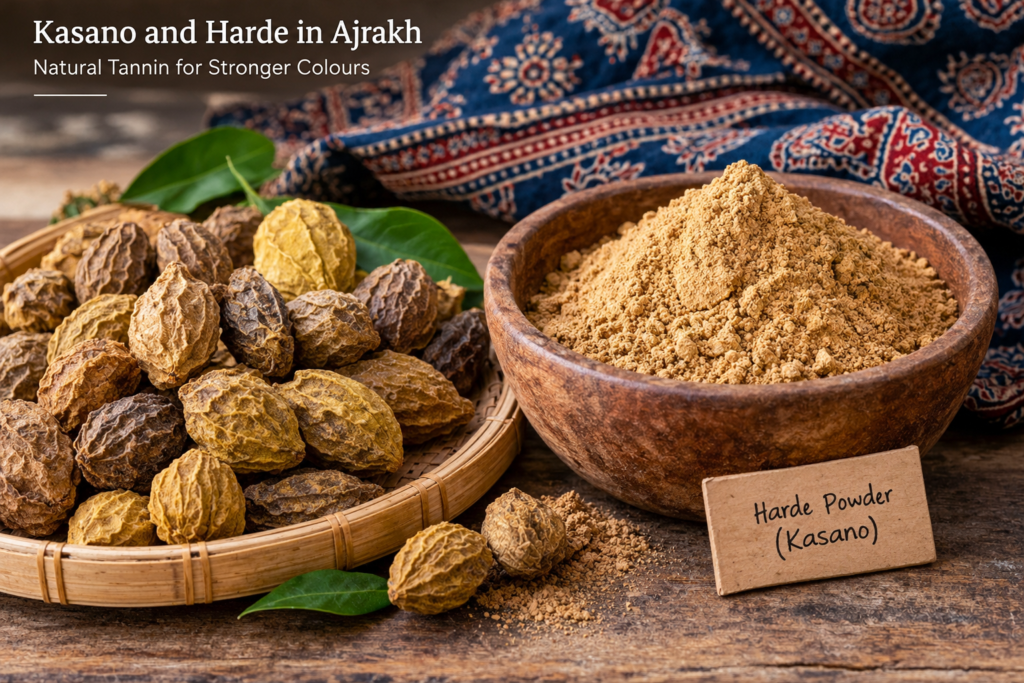
Among these traditional materials, Kasano, also known as Harde or Myrobalan, plays an important role in fabric preparation. Harde contains natural tannin s, and artisans use its tannin-rich properties to prepare cotton for later mordanting and dyeing stages.
This process reveals an interesting connection between traditional craft and textile science. An artisan may not describe every step using modern chemical terminology, but generations of practice have taught Ajrakh artisans how each material behaves.
When we understand Kasano, we also understand an important principle of natural dyeing: color begins with preparation.
Natural Mordants in Traditional Ajrakh
Natural dyeing requires more than a color-producing plant. The artisan must also prepare the fabric so that the dye can interact with the fiber effectively.
Traditional Ajrakh processes use different natural materials for different purposes. Some materials provide tannin s, while others help create the chemical conditions that support color development.
These materials fall into the broader group of natural mordants and mordanting agents.
Harde has a special role because it provides tannin s.
The artisan uses the tannin-rich material during fabric preparation. Later stages build on this foundation and help develop the desired colours.
This sequence demonstrates how Ajrakh combines craft knowledge with natural material science.
What Is Kasano?
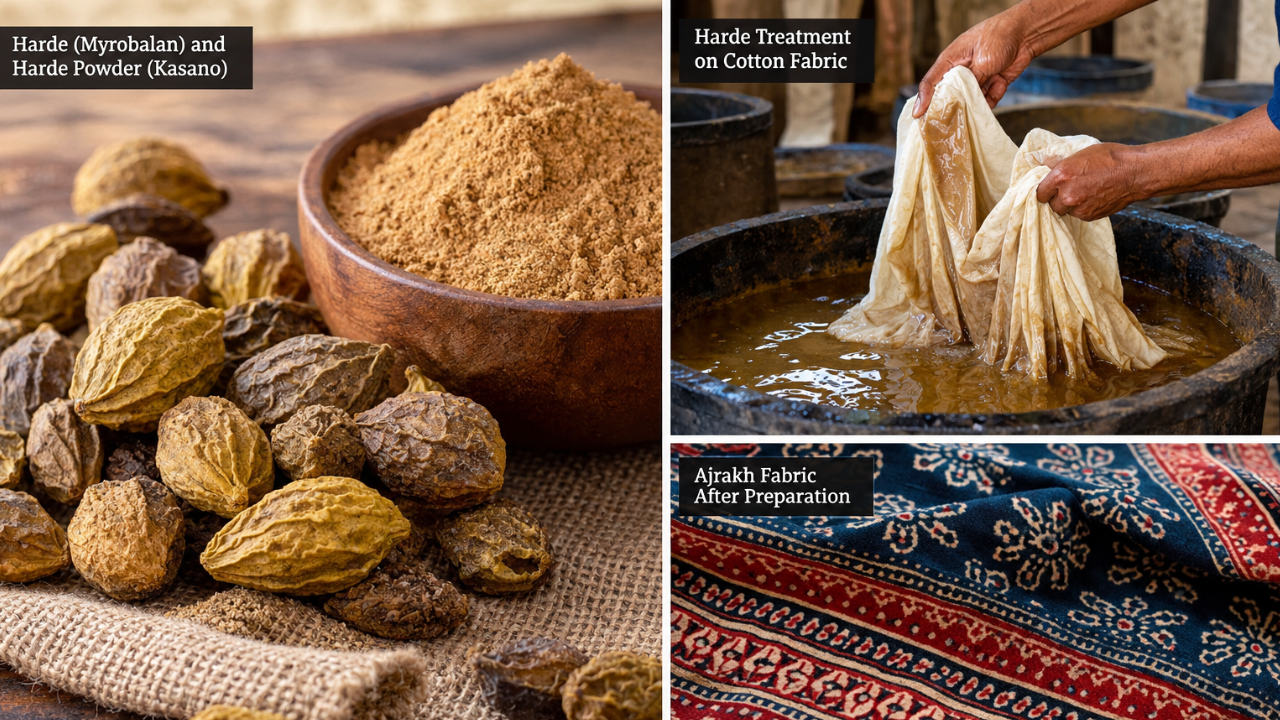
Kasano refers to Harde, which people also call Myrobalan. The material comes from the fruit of Terminalia chebula, a plant found across parts of South Asia.
Harde contains naturally occurring tannin s. These compounds make the material valuable in traditional textile preparation.
Artisans can process Harde into a powder or prepare it in another suitable form before they introduce it to the fabric.
The artisan does not use Harde simply to make the cloth red.
Instead, Harde helps prepare the textile for later stages.
That distinction matters because natural dyeing works as a sequence of connected treatments.
Why Do Ajrakh Artisans Use Harde?
Cotton creates a particular challenge for natural dyeing. Many natural dyes do not bond with cotton as easily as they interact with some other fibers.
Artisans therefore prepare cotton before they introduce important dyes.
Harde helps them create a tannin-rich foundation.
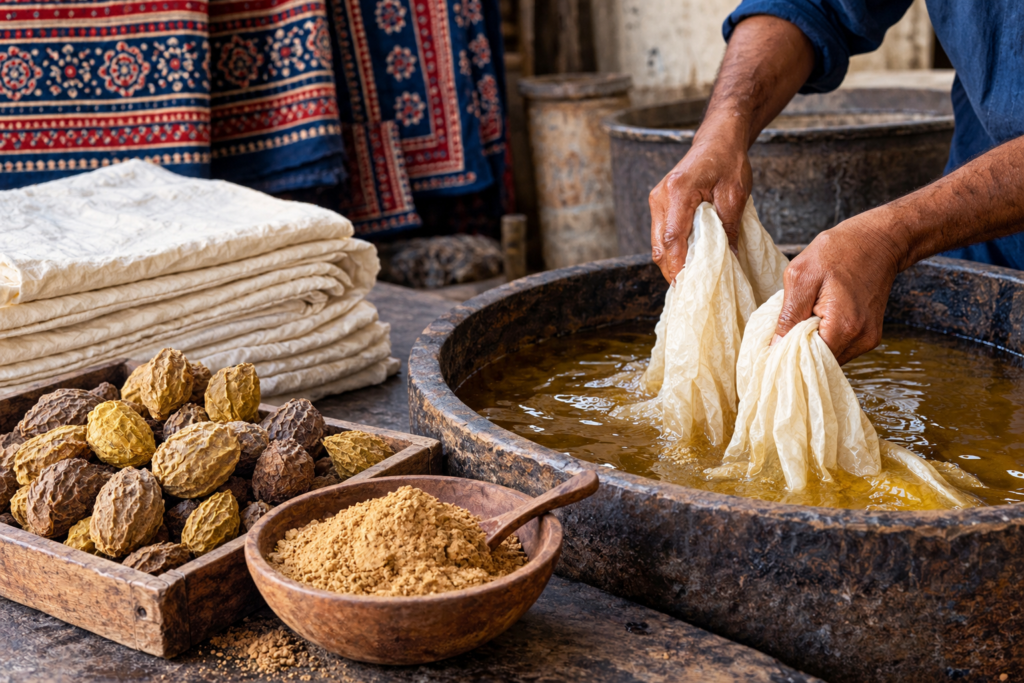
The artisan first cleans the cotton and prepares its surface. Then the artisan introduces Harde through the traditional treatment method. The tannin s interact with the cotton fibers and prepare the cloth for subsequent stages.
The artisan then continues with mordanting and dyeing.
Each step supports the next one.
This approach explains why traditional Ajrakh production takes time. The artisan cannot simply skip preparation and expect the same color depth or consistency.
Understanding Tannin
Tannin gives Harde much of its importance in traditional textile preparation.
Plants naturally produce tannin s. These compounds belong to a broad group of polyphonic substances, and different plants contain different tannin profiles.
Harde contains a substantial amount of tannin.
When artisans introduce Harde to cotton, the tannin s interact with the textile fibers. Later, the tannin s can interact with mordanting materials and influence the behaviour of natural dyes.
This interaction helps artisans create the conditions they need for subsequent color development.
The artisan therefore uses Harde as part of a larger chemical sequence.
The process follows a simple logic:
Prepare the fabric → introduce tannin s → carry out mordanting → apply the natural dye → develop the color → wash the fabric.
The artisan controls each stage to achieve the desired result.
How Does Harde Prepare Cotton?
The artisan begins with fabric preparation.
First, the artisan cleans the cotton. This step removes unwanted substances that could interfere with absorption.
Next, the artisan prepares the Harde treatment.
The artisan uses Harde powder or another prepared form and introduces it to the fabric according to the traditional process.
The cotton absorbs the tannin-rich material.
The artisan then allows the fabric to move into the next stage.
At this point, the fabric does not yet show the final red color. The artisan focuses on creating the right foundation first.
This approach reflects one of the most important principles of traditional dyeing:
The artisan builds the final color through preparation rather than creating it in one step.
Harde Powder in the Ajrakh Process
Harde powder provides a practical form of this traditional material.
The artisan can prepare and use the powder during the fabric-treatment stage. The powder supplies tannin s that help the artisan establish the conditions needed for later mordanting.
However, Harde powder does not act as the final red dye.
Instead, it supports the process that follows.
This difference helps us understand why Ajrakh involves several materials rather than one universal dye.
The artisan combines materials according to the role each one plays.
Harde contributes tannin s.
Mordants create important chemical interactions.
Natural dyes contribute color.
Washing removes excess material and helps reveal the developed shade.
Printing tools place the design exactly where the artisan wants it.
Together, these actions create the finished textile.
The Science Behind Mordanting
Mordanting helps natural dyes interact more effectively with textile fibers.
Different dyes behave differently, so artisans choose materials and treatments according to the color they want to develop.
Harde contributes tannin s to this system.
Tannins can interact with certain metal-based mordants and form complexes. These complexes can influence how natural dyes behave on the fabric.
This chemistry gives Harde an important supporting role.
The artisan does not simply add one ingredient after another randomly. The artisan follows a sequence that allows each material to perform its function.
Modern textile science can explain many of these interactions at the molecular level. Traditional Ajrakh artisans, however, developed their own practical understanding through years of observation and experience.
They learned how materials behave.
They learned how fabric responds.
They learned how color changes during washing.
They learned how temperature and timing influence the result.
That knowledge keeps the process alive.
How Does Harde Prepare the Fabric for Red?
The relationship between Harde and Ajrakh’s red color deserves special attention.
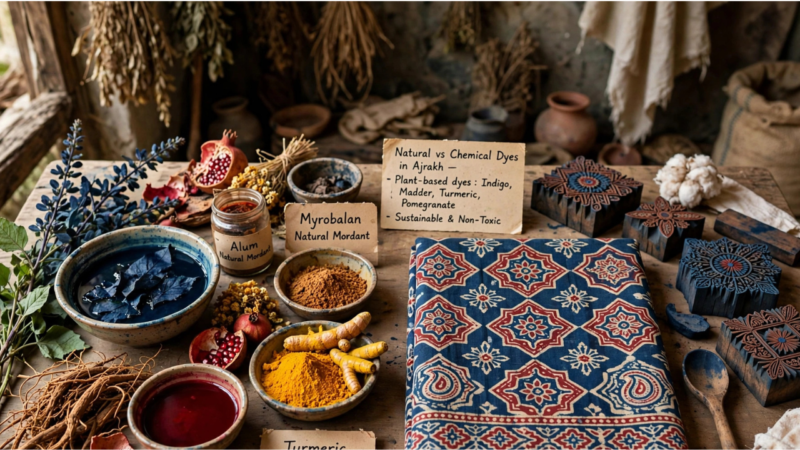
Traditional Ajrakh processes can use natural red dye sources such as madder and related materials. These sources contain color-producing compounds that can create rich red and reddish shades.
However, the artisan must prepare the fabric before the red dye can perform its role effectively.
Harde contributes tannin s.
The artisan then carries out the appropriate mordanting process.
After that preparation, the artisan introduces the natural red dye.
The prepared textile gives the dye a better environment for color development.
The artisan can then wash the fabric and observe the resulting shade.
The exact result depends on many factors, including:
- the natural dye source
- the quality of the Harde
- tannin concentration
- mordant choice
- fabric preparation
- water quality
- temperature
- processing time
- washing technique
Natural dyeing therefore requires both material knowledge and careful control.
From Harde to Red: The Traditional Logic
We can understand the process through a simplified sequence.
Step 1: Prepare the Cotton
The artisan cleans the cotton and prepares it for treatment.
Step 2: Introduce Harde
The artisan applies the Harde treatment and allows the fabric to absorb the tannin-rich material.
Step 3: Develop the Tannin Foundation
The tannin s interact with the cotton and create a useful foundation for later stages.
Step 4: Carry Out Mordanting
The artisan uses the required mordant according to the intended color and printing process.
Step 5: Apply the Natural Red Dye
The artisan introduces the chosen natural dye source.
Step 6: Develop the Color
The dye interacts with the prepared fabric and mordant system.
Step 7: Wash the Cloth
The artisan washes the textile and removes excess material.
Step 8: Continue the Printing Process
The artisan repeats printing, dyeing, washing, and drying wherever the design requires additional layers.
This sequence shows why Ajrakh production demands patience.
The artisan builds color gradually.
Why Natural Red Looks So Rich
Natural red can show a depth that comes from the complexity of its production.
Synthetic dyes can create highly consistent shades, but natural dyes respond to many variables.
The plant source, extraction method, mordant, water, temperature, fabric, and processing time can all influence the final color.
As a result, natural red may show subtle differences from one batch to another.
Ajrakh embraces these characteristics.
The red works particularly well with deep indigo, black, and natural white. The combination creates the earthy visual character that many people associate with traditional Ajrakh.
The artisan achieves this effect through layers rather than shortcuts.
Kasano Connects Botany and Textile Craft
Kasano demonstrates how a plant can become part of an advanced textile process.
The artisan starts with a natural material.
That material contains tannin s.
The artisan introduces those tannin s to cotton.
The tannin s then participate in later mordanting and dyeing stages.
The artisan eventually produces a finished textile.
This journey connects the plant world with textile production.
It also shows why traditional craft knowledge deserves careful documentation.
When an artisan understands Harde, they do not simply know the name of a plant. They understand how that material behaves inside a complex production system.
The Artisan’s Knowledge Matters
A written recipe cannot capture every part of traditional Ajrakh knowledge.
Artisans learn by watching, practicing, adjusting, and repeating.
They observe the fabric.
They judge consistency.
They monitor color.
They recognize changes during washing and drying.
They adjust the process when local conditions change.
This practical knowledge gives the craft its flexibility.
A younger artisan can learn the basic sequence from an experienced crafts person, but years of practice help them understand the small details that affect the final result.
Kasano therefore represents more than a raw material.
It represents knowledge passed between generations.
Traditional Science in the Workshop
An Ajrakh workshop can function like a living laboratory.
Artisans work with natural materials and observe how each material changes the fabric.
They learn through repeated experimentation.
They discover which materials work well together.
They learn how water affects color.
They observe how temperature changes dye development.
They recognize how washing reveals or changes a shade.
Modern science gives us tools to analyses these processes in detail. Traditional artisans developed practical solutions long before modern textile laboratories became common.
Their knowledge comes from generations of direct experience.
Why Natural Mordants Still Matter
Today, designers and textile enthusiasts increasingly explore natural dyeing and traditional textile practices.
Natural mordants and tannin-rich materials attract attention because they support traditional approaches to color development.
However, we should not treat every natural material as automatically sustainable.
Responsible production requires careful resource management.
Artisans and textile producers need to consider:
- responsible plant sourcing
- water consumption
- wastewater management
- material waste
- local availability
- processing efficiency
- artisan livelihoods
Sustainability depends on the complete system.
Traditional knowledge can guide modern textile practices, but responsible production still requires careful evaluation.
Harde and the Identity of Ajrakh
Ajrakh does not depend on one color or one technique.
It combines printing, dyeing, washing, preparation, and repetition.
Harde forms one important part of that system.
When we look at an Ajrakh saree, we see the final pattern. We see red motifs, dark indigo backgrounds, geometric forms, and intricate borders.
We rarely think about the earlier stages.
We do not see the Harde treatment.
We do not see the tannin s interacting with the fabric.
We do not see the artisan preparing the cloth before the red dye enters the process.
Yet those hidden stages help create the final result.
Why the Red Deserves a Closer Look
Red gives Ajrakh a strong visual identity.
It creates contrast against indigo.
It adds warmth to geometric patterns.
It balances the darker shades.
But the beauty of the red does not come only from the dye source.
The preparation matters.
Harde helps prepare the textile.
Tannins contribute to the mordanting system.
The mordant supports the color-development process.
The natural dye contributes the visible red.
The artisan controls the sequence.
The washing reveals the result.
Each stage contributes to the final appearance.
Protecting the Knowledge Behind the Material
If we want to preserve Ajrakh, we need to preserve more than its patterns.
We need to protect the knowledge behind its production.
That knowledge includes:
- Harde preparation
- Kasano use
- tannin treatment
- natural mordants
- natural dyes
- fabric preparation
- block printing
- washing
- drying
- color development
- traditional tools
- artisan techniques
When artisans continue to practice these techniques, Ajrakh remains a living craft rather than a historical object.
The process matters as much as the finished saree.
The Living Science of Kasano
Kasano may look like a small part of Ajrakh, but it reveals the complexity hidden inside the textile.
Harde gives artisans a natural source of tannin s.
The artisan uses those tannin s during fabric preparation.
The prepared fabric then moves through mordanting and natural dyeing stages.
The artisan builds the final color through a carefully connected sequence.
This process shows us why Ajrakh requires patience and expertise.
The artisan does not simply color cotton.
The artisan prepares the cotton, builds chemical interactions, develops color, washes the fabric, and repeats the process until the textile reaches the desired appearance.
That approach creates more than a beautiful print.
It creates a textile that carries knowledge.
Final Perspective: Where Plant, Science and Craft Meet
The story of Kasano and Harde shows us a side of Ajrakh that we cannot see immediately.
We see the red.
We see the indigo.
We see the geometric patterns.
But behind those visible elements, artisans work with tannin s, mordants, natural dyes, cotton, water, heat, time, and repeated processing.
Harde plays an important supporting role in this system. Its tannin-rich properties help artisans prepare the fabric for later mordanting and dyeing stages.
The artisan then turns this preparation into color through skill and patience.
That is the real beauty of Ajrakh.
Nature provides the materials. Traditional knowledge explains how to use them. The artisan brings the entire process together.
Kasano therefore deserves attention not simply as Harde powder or Myrobalan, but as part of the living material science that keeps Ajrakh’s natural dye tradition alive.